

The MotoAmerica Mission Super Hooligan class keeps proving that big, heavy American V-twins can absolutely rail a road course. Saturday qualifying at Ridge Motorsports Park dropped another reminder: ARCH Motorcycle Racing's Corey Alexander punched his name to the top of the timing sheet, claiming pole position ahead of a stacked field that included Yamaha-backed machinery and a former MotoAmerica champion. If you've been watching this class and wondering what separates a pole-sitting bagger-derived platform from the stock touring rig sitting in your garage, buckle up — because the delta is real, and most of it is bolt-on.
Performance exhaust systems are the first and loudest piece of that puzzle, and the Super Hooligan field runs purpose-built pipes that the streetable versions of are sitting on shelves right now. More on that below.
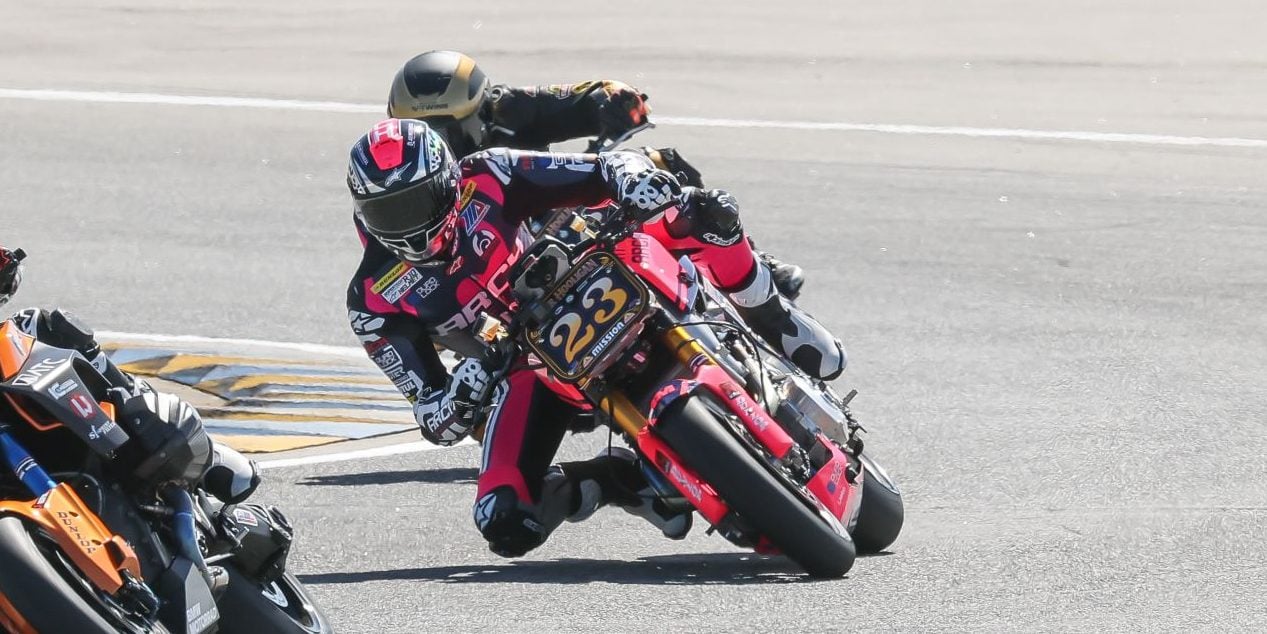
Alexander, ARCH and What Pole Position Actually Means
Corey Alexander — number 23 — earns his living on the edge of grip, and Saturday's qualifying session at Ridge Motorsports Park underlined why ARCH Motorcycle Racing has been a force worth tracking in the Super Hooligan class. Claiming pole at a technical, elevation-changing circuit like The Ridge isn't a fluke. Ridge Motorsports Park in Shelton, Washington, is a 2.47-mile road course with 180 feet of elevation change and a mix of fast sweepers and tight technical sections that punish any setup imbalance. You need your suspension sorted, your power delivery clean out of slow corners, and enough top-end to carry speed through the longer bends.
Alexander got all three right. That's the template.
Behind him, BPR Racing Yamaha's Bryce Kornbau slotted into second and teammate Andy DiBrino completed a BPR front-row threat in third. OrangeCat Racing's Josh Herrin — no stranger to fast qualifying laps — wound up fourth, and Saddlemen Race Development's James Rispoli rounded out the top five. The top five represents a who's-who of American V-twin road racing talent, and it reinforces just how serious the Super Hooligan class has become as a proving ground for parts and setups that eventually trickle down to street and touring builds.
What the Super Hooligan Class Is Really Testing
The MotoAmerica Mission Super Hooligan class runs American V-twin motorcycles — think Harley-Davidson Sportster and Milwaukee-Eight-based platforms — modified within a ruleset that keeps the spirit of the machine intact while allowing real performance upgrades. This isn't spec racing. Teams are legitimately chasing horsepower, suspension compliance and brake performance lap after lap.
For viewers and riders at home, this matters because the class functions as a rolling dyno for parts combinations that real people actually buy. When a team commits to a specific high-flow air cleaner or exhaust configuration and that combination helps put their rider on pole, that's product validation you can't buy from a press release.
The ARCH platform Alexander is campaigning is built around principles that serious street and track riders already apply to their own bikes: reduce weight where possible, free up airflow, tune the fuel delivery to match, and make sure the chassis can put power to the pavement. None of those steps are exotic. All of them are accessible.
Suspension Is the Invisible Lap Time
Ridge Motorsports Park's elevation changes and varied corner radii make it one of the most suspension-demanding circuits on the MotoAmerica calendar. A bike that's even slightly out of adjustment in its spring rate or damping will wash the front in fast sweepers or hop under hard braking at the end of the front straight. The teams running at the front of the Super Hooligan field understand this, which is why suspension tuning gets as much attention as the engine package.
For your touring build, this translates directly. Whether you're running a Road Glide, a Street Glide or any other full-dress bagger, the factory suspension is designed around ride comfort and load-carrying — not corner speed. If you've ever felt your front end push in a decreasing-radius turn or had your rear pogo under hard acceleration out of a corner, you already know the problem.
Upgraded bagger rear shocks are the single most noticeable handling upgrade most riders will ever make. The difference between a factory rear shock and a properly valved performance unit isn't subtle — it's the difference between managing your bike and driving it. Pair that with a quality progressive fork spring kit up front and you've closed a significant portion of the gap between a stock tourer and what the Super Hooligan teams are working with.
Extracting Power: The Exhaust and Cam Conversation
Every competitive Super Hooligan build starts with breathing. The Milwaukee Eight family — from the 107 through the 117 — is a fundamentally strong engine architecture that responds aggressively to airflow improvements. Factory exhaust routing and intake restrictions are the two biggest choke points, and removing them is where most serious builds begin.
On the exhaust side, the goal is reducing back-pressure while maintaining mid-range torque. Full two-into-one exhaust systems designed for touring platforms accomplish both when paired with proper tuning. A slip-on will get you some of the way there acoustically, but if you're chasing real dyno numbers, a full system is the only move.
Cams are the next conversation. The stock Milwaukee Eight cam profiles are ground for low emissions and broad streetability — both legitimate design goals, but not goals that align with putting out maximum horsepower. A properly spec'd Milwaukee Eight performance cam swap — matching lift and duration to your intended use case, your displacement and your supporting mods — is how the Super Hooligan teams move the needle from stock output toward real track numbers. Cams don't work in isolation; your air cleaner, exhaust and tuning all need to be matched to the cam profile you select, which is why this modification demands a dyno session with a shop that understands the platform.
Speaking of air intake: the performance air cleaner is the cheapest horsepower on a Milwaukee Eight. Removing the factory airbox restriction and feeding the engine more cold, dense air consistently shows up on the dyno as real, usable mid-range and top-end gains. The teams in the Super Hooligan paddock aren't running stock airboxes. Neither should you if you're serious about the build.
Brakes: Where Pole Laps Are Defended
Ridge Motorsports Park has a legitimate front straight that requires late, hard braking to make the corner at the end. Alexander's ability to hold pole — and convert it into competitive race laps — depends in part on stopping power and brake feel that inspires confidence under maximum deceleration. Factory bagger brakes are adequate for street use. They are not adequate for the kind of riding that makes this class worth watching.
For riders who push their touring bikes hard — whether on canyon roads, track days or two-lane backroads that demand real commitment — upgraded brake components are a safety and performance conversation simultaneously. Braided stainless lines reduce brake fade under heat and eliminate the spongy feel that rubber lines develop over time. Quality aftermarket rotors and pads that match your riding style and expected heat range complete the package.
If you haven't evaluated your braking system as part of your performance build, you're leaving both lap time and margin on the table.
Tuning: The Step Most Builders Skip
Every single modification discussed in this post — exhaust, cams, air cleaner, suspension — delivers its full potential only when the fuel delivery is calibrated to match. Harley-Davidson's factory ECU tune is designed to meet emissions standards and protect the engine across a wide range of conditions and fuels. It is not designed to maximize power with a full exhaust, aggressive cam and high-flow intake.
The Super Hooligan teams aren't running stock tunes. Not even close. Every competitive entry has a custom map dialed in to their specific combination of parts, fuel and expected operating conditions. For street builds, this means a quality fuel management tuner or a custom dyno tune on an open ECU — whichever path your shop recommends for your combination.
Skipping the tune after adding exhaust and intake is like buying race tires and running them at street pressures. You've spent the money, but you haven't gotten the result.
What Alexander's Pole Means for Your Next Build Step
Corey Alexander putting ARCH Motorcycle Racing on pole at Ridge Motorsports Park isn't just a Saturday morning news item for fans of the class. It's a proof of concept for the entire performance V-twin ecosystem. The same principles — airflow, suspension compliance, proper tuning, matched braking — that separate a pole-sitting Super Hooligan entry from the back of the grid are the same principles that separate a properly built street bagger from a stock one.
The Super Hooligan paddock does this work on a budget and timeline that professional racing demands. You can apply the same logic to your build at whatever pace your schedule and budget allow. Start with exhaust and intake, add a tune, move to cams when you're ready, and don't neglect suspension and brakes along the way. That's the roadmap the race teams proved works — and it works on the street too.
Ready to build your version of what the Super Hooligan teams are running? Start with our performance bagger exhaust systems — the foundation of any serious Milwaukee Eight build. Then spec your Milwaukee Eight cam kit to match your riding style and displacement. Shop our full performance parts catalog at vtwinbikers.com and build the bagger that belongs at the front of the pack.