

Oscar Gutierrez just proved that the bagger is no longer a novelty on the world stage — it's a weapon. Saturday afternoon at MotorLand Aragón in Alcañiz, Spain, Gutierrez put his Niti Racing Harley-Davidson on pole position in FIM Harley-Davidson Bagger World Cup qualifying, clocking a 1:56.587 over the 3.15-mile (5.08 km) road course. If you've been watching this series grow and wondering what it takes to run a Milwaukee Eight-powered touring machine at that level, this qualifying session is a masterclass in what separates a stock bagger from a race-ready machine — and what upgrades on YOUR bike are directly informed by what's happening at circuits like Aragón. Start with the foundation: performance exhaust and a proper high-flow air cleaner are the entry points to building the kind of power these teams extract from a production-based engine platform.
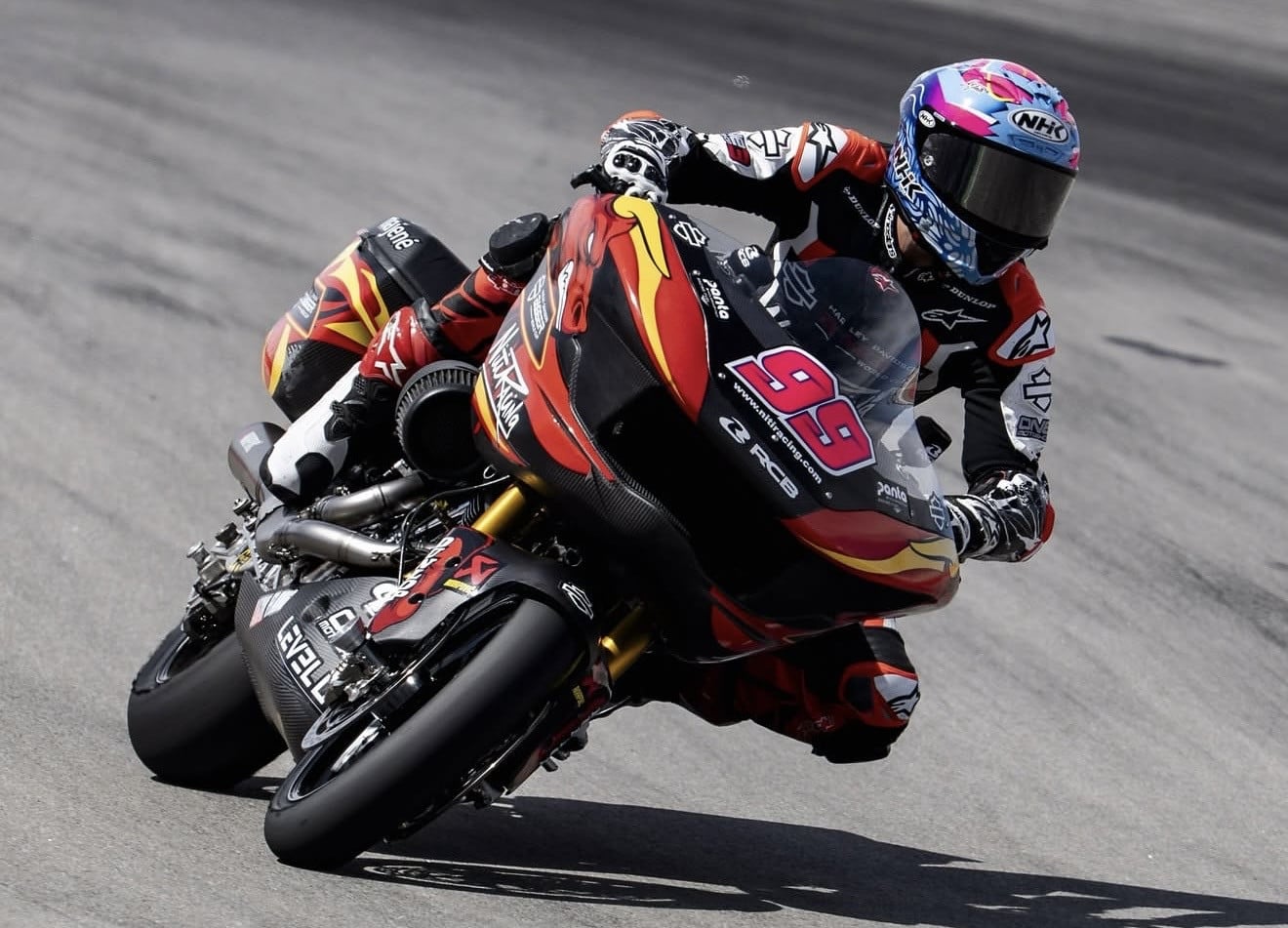
What the Bagger World Cup Actually Is
The FIM Harley-Davidson Bagger World Cup is not a regional club race. It runs alongside the MotoGP World Championship calendar, which means these touring bikes are sharing pit lanes and paddock space with the most sophisticated prototype motorcycles on the planet. The series uses Dunlop control tires — meaning every rider runs the same rubber — and the bikes are based on Harley-Davidson touring platforms. That spec tire rule is critical: when every rider is on identical rubber, the separation in lap times comes down to chassis setup, engine output and rider talent.
At Aragón, Gutierrez topped a field of 10 riders. His teammate Andrea Iannone — yes, that Iannone, a name well-known in Grand Prix racing — slotted in second with a 1:56.726. Eric Granado, riding for Joe Rascal Racing Harley-Davidson, took third at 1:56.876. The top three were separated by less than three-tenths of a second over a lap that takes nearly two full minutes. That is razor-thin.
On the American side, Max Toth, Travis Wyman and Jake Lewis represent Saddlemen Racing Harley-Davidson. Toth posted the fastest American time at 1:58.072 for sixth overall. Wyman and Lewis came in ninth and 10th at 1:59.472 and 1:59.579 respectively. There is a genuine gap between the top international runners and the American contingent right now — roughly two seconds per lap — but the fact that American riders are competing at all on this stage, on baggers, at a MotoGP-round venue, matters.
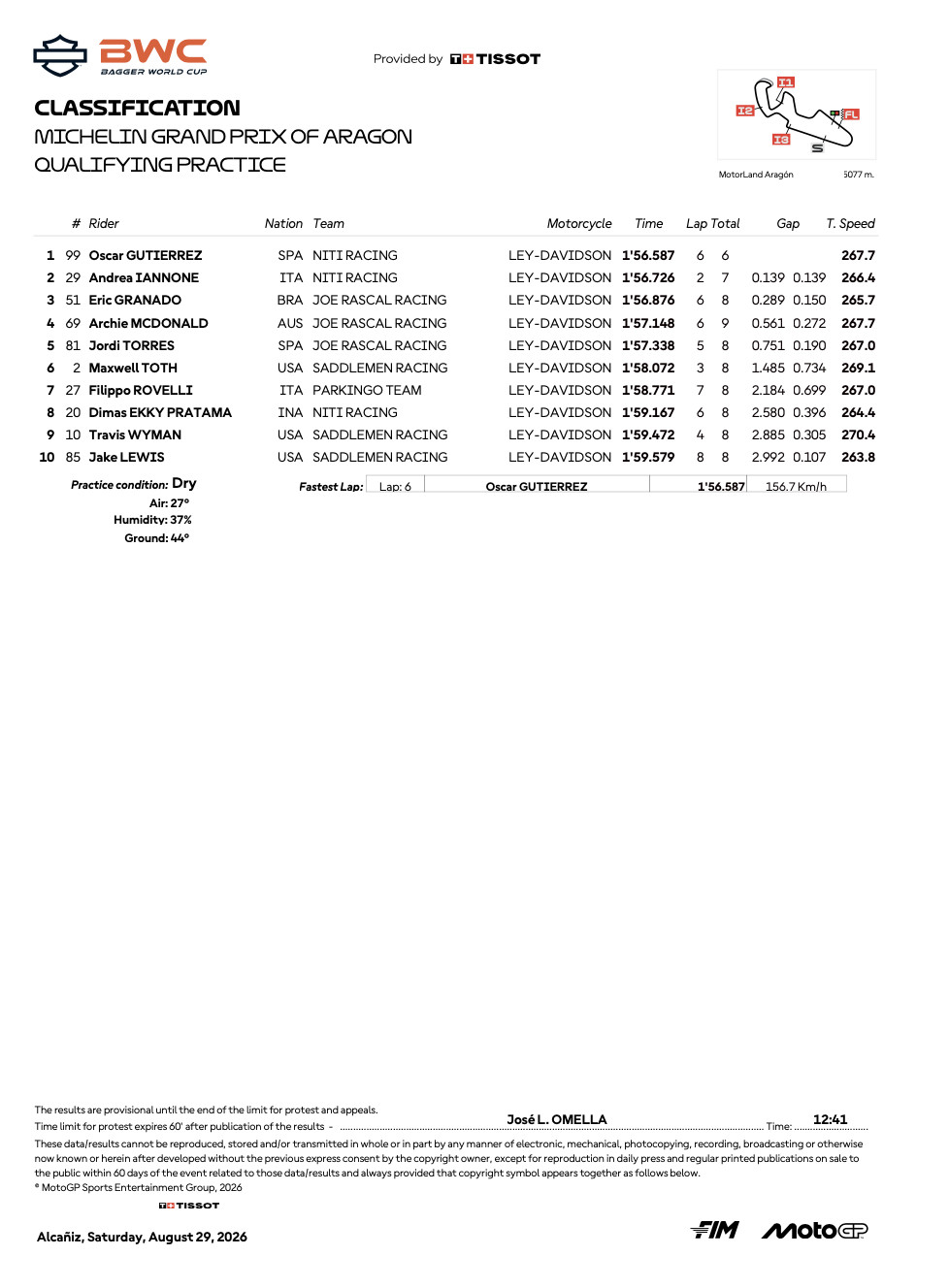
Breaking Down the Lap Time Gap
Two seconds per lap might not sound like much, but over a 3.15-mile circuit, that gap is everything. To understand why it exists and what closes it, you have to think about where time gets made and lost on a heavyweight touring machine.
These bikes carry significantly more mass than a Superbike. Every braking zone, every corner entry and every throttle application point is a negotiation between chassis rigidity, suspension compliance and power delivery. The teams at the top of this field are extracting maximum exit speed by getting the power down early, which means their engines need to produce torque cleanly and progressively off the bottom of the rpm range — not just peak horsepower at redline.
That kind of throttle response and low-to-mid torque delivery on a Milwaukee Eight comes from serious engine work: cam timing, combustion chamber optimization, fuel mapping and exhaust scavenging. A performance cam directly affects how the engine builds torque through the mid-range, which is exactly where road course exits live. Pair that with a fuel tuner that can be mapped to your specific combination of parts, and the engine stops being a liability in corners and starts being an asset on exit.
Suspension is the other half of this equation. A stock touring fork and rear shock are not set up for corner speed. They're set up for comfort over long miles, which is a completely different tuning target. Race teams rebuild suspension from the ground up — and for YOUR street build, bolt-on performance shocks and upgraded fork internals are the most direct translation of what these race programs do.
The Niti Racing Advantage
Gutierrez's Niti Racing operation earned pole by four-tenths over Iannone — and Iannone is his teammate. That detail tells you something important: even within the same team running the same base platform, individual machine setup and rider-specific tuning matters. Niti Racing clearly had Gutierrez's bike dialed to his style for Aragón.
The Aragón circuit demands high-speed stability in the first sector and precise direction changes through the technical infield. A bagger's longer wheelbase gives it a natural advantage in high-speed stability compared to a shorter-chassis machine, but that same geometry makes direction changes slower and more deliberate. The teams that win here find the balance between exploiting the stability and minimizing the penalty in slower corners.
For your build, that translates directly to handlebar and front-end geometry choices. Performance handlebars that position you more aggressively over the front wheel shift weight forward and improve feel at the front tire — which is exactly what you need when you're trying to carry more speed through a corner on a heavy bike. It's not a race mod for race mods' sake. It's geometry doing physics.
What the Saddlemen Racing Americans Need
Max Toth, Travis Wyman and Jake Lewis are racing under the Saddlemen Racing banner, and their lap times tell a story. Toth's 1:58.072 puts him two full seconds behind Gutierrez's pole lap, and Wyman and Lewis are closer to three seconds back. At a circuit this fast, that gap is significant — but it's not insurmountable.
When you're looking at a two-to-three second deficit on a 1:56 baseline lap, the time is almost certainly spread across multiple areas rather than hiding in one obvious place. Engine output is part of it. Chassis setup is part of it. Tire management over a qualifying lap is part of it. And rider confidence in the limits of the machine feeds all three.
The interesting thing about the Bagger World Cup's growth is that it creates a direct feedback loop between race development and street parts. Every time a team figures out that a specific suspension geometry or engine combination finds more time on track, that information eventually finds its way into the aftermarket parts you can bolt onto YOUR touring bike. The LED lighting upgrades that make your Road Glide visible at night? Aerodynamic fairing work that reduces drag on race bikes informs those designs. The engine internals that help a race bagger pull out of Aragón's slow corners? Those cam profiles and combustion chamber specs come from the same engineering logic that drives the performance parts available for your build.
Aragón as a Test Bed for Bagger Performance
MotorLand Aragón is a legitimate test of a motorcycle's capabilities. The circuit is 3.15 miles long, runs at altitude, and has a mix of high-speed sweepers, heavy braking zones and technical low-speed corners. It is not a track that flatters weak chassis or hesitant engines. The fact that the Bagger World Cup is running here — not at some short oval or closed-off parking lot — means the engineering and tuning data coming out of this event is the real thing.
Dunlop's control tire mandate deserves another mention here because it's relevant to what you think about when selecting rubber for your own bagger. Control tire programs exist to level the competition and eliminate tire development as a variable. What you see in these lap times is pure machine and rider. When you're selecting tires for your performance Street Glide or Road Glide, the lessons from what compounds perform at sustained lean angles and hard braking — under real track conditions — should inform your choice.
For the American riders, the path to closing the gap runs through every major system on the bike simultaneously. There's no single bolt-on that produces two seconds per lap. It's a combination of engine output, chassis rigidity, suspension tuning and aerodynamics working together. That's the same philosophy you should bring to YOUR build: think in systems, not individual parts.
What This Means for Your Build
The Bagger World Cup running at MotoGP events in Spain is the clearest possible signal that the performance bagger has arrived as a legitimate motorsport discipline. Gutierrez's 1:56.587 pole lap at Aragón — on a Harley-Davidson touring platform, on control tires, on a 3.15-mile road course that hosts the best motorcycle racers on earth — is not a novelty. It's a benchmark.
Every modification these race teams make to their machines has a street equivalent. The exhaust that helps scavenge spent gases more efficiently at high rpm on a race bike is the same philosophy behind the performance exhaust systems in our catalog. The aggressive cam timing that builds torque in the mid-range on Gutierrez's Niti Racing machine is the same argument for upgrading the cams on YOUR Milwaukee Eight. The suspension rebuild that lets a 700-plus-pound bagger carry speed through Aragón's corners is the same case for swapping out your stock shocks and fork internals before your next canyon run or track day.
You don't have to race at Aragón to benefit from what these teams are learning. The engineering trickles down, and the parts that translate it to the street are right here. Shop our performance exhaust collection and our suspension upgrades at vtwinbikers.com — because what wins on a MotoGP circuit on Saturday is what makes your bagger faster, sharper and more capable every time you ride.