

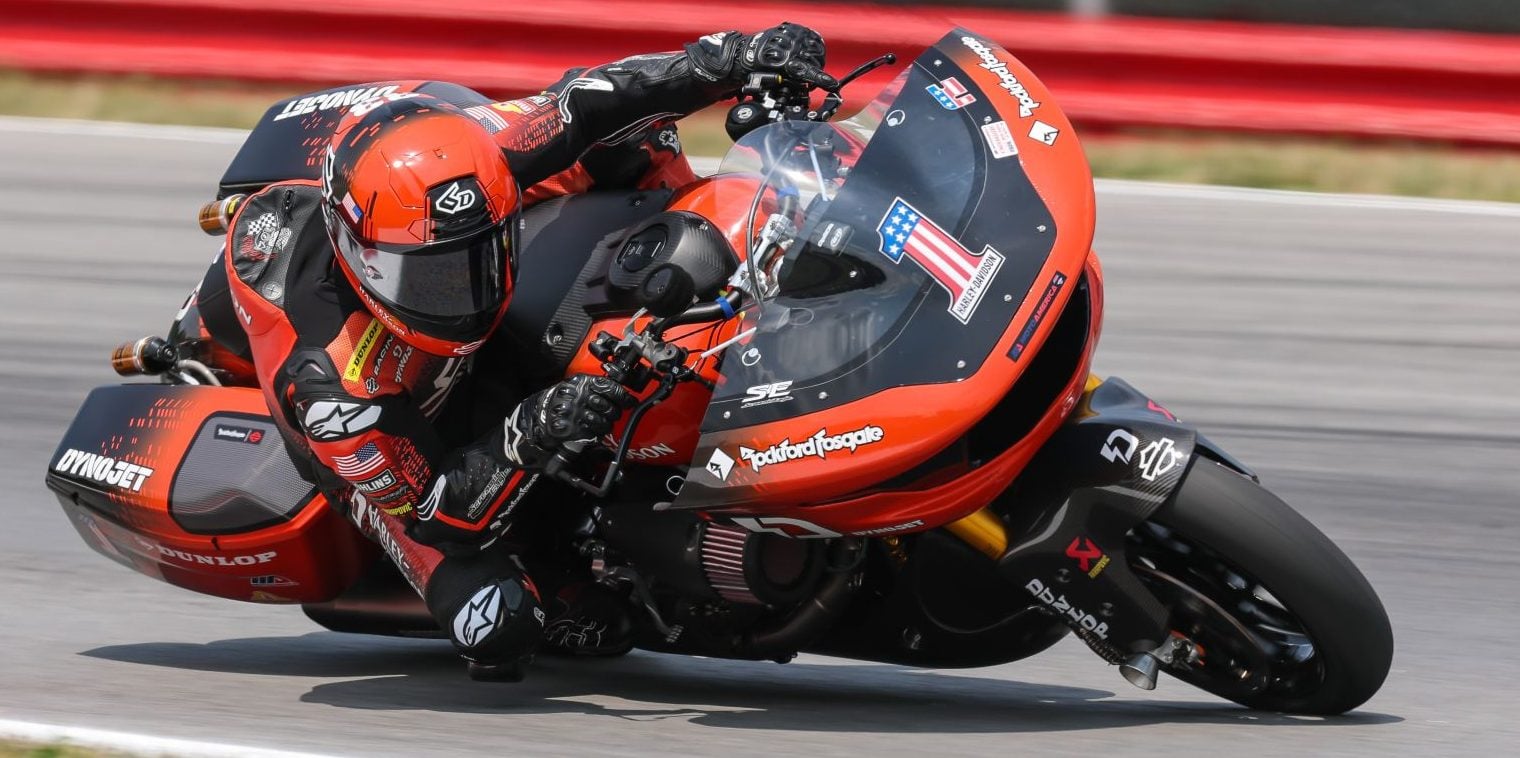
Kyle Wyman parked his Harley at the top of the timing sheet Friday at Circuit of The Americas, and if you're building a performance bagger, that result is more than a headline. Every lap those factory teams turn at COTA is a live dyno run in race conditions — and the parts they lean on are the same categories you can bolt onto your touring bike.
What Went Down in KOTB Practice at COTA
MotoAmerica Mission King of the Baggers practice at Circuit of The Americas on September 11, 2026 ended with Harley-Davidson x Dynojet Factory Racing's Kyle Wyman sitting fastest overall. Behind him, the J&P Cycles/Motul/Vance & Hines Factory Indian squad put two bikes in the top three — Hayden Gillim second and Troy Herfoss third. Rounding out the top five were Wyman's Harley-Davidson x Dynojet teammate Bradley Smith in fourth and SDI Racing's Tyler O'Hara in fifth.
Five riders, two manufacturers, one brutal 5.5-kilometer road course that rewards horsepower, chassis stability and tire management in equal measure. COTA's elevation changes and high-speed sweepers are unforgiving — the baggers that survive at the front are sorted down to the last detail.
Why Kyle Wyman at the Top Matters
Wyman has been one of the most consistent threats in King of the Baggers since the class launched. Running under the Harley-Davidson x Dynojet banner, his program reflects the kind of integrated development that comes from pairing a factory motorcycle platform with serious tuning infrastructure. Dynojet's involvement isn't just a sticker — fuel and ignition calibration is a central discipline in bagger racing, where Milwaukee Eight engines run at sustained high RPM in a thermal environment they were never stock-designed to handle.
Practice pace at a venue like COTA tells you which bikes are already dialed in before qualifying. Wyman topping the sheet means the Harley side of the garage found its setup window early. Whether that holds through the heat of race day is another question, but first practice is where you learn whether your baseline tune is in the ballpark or whether you're chasing the map all weekend.
For anyone running a Dynojet Power Vision tuner on their touring bike, this is real-world validation. The factory teams are running Dynojet hardware under race conditions at one of the most demanding circuits in North America. Your street tune and your weekend canyon run are lower-stakes versions of the same equation.
The Indian Side: Gillim and Herfoss Are Right There
Don't read Wyman's P1 result as a Harley runaway — Hayden Gillim was right behind him in second, and Troy Herfoss slotted third for the same J&P Cycles/Motul/Vance & Hines Factory Indian team. That's a one-two for the Indian Challenger program and a clear signal that the gap between the two factories is razor thin heading into qualifying and race day.
The Vance & Hines connection on the Indian side is particularly relevant. Vance & Hines has been deep in bagger racing since day one, developing exhaust systems and engine hardware specifically for the King of the Baggers class. Their factory race exhaust work filters down into the street-performance catalog — the Vance & Hines exhaust systems available for your Milwaukee Eight or Indian PowerPlus are products shaped by exactly this kind of racing program.
Herfoss in third adds depth to the Indian effort. Running two riders inside the top three tells you the Indian Challenger platform and the team's setup are consistent — this isn't a one-bike anomaly. Consistency across two race bikes usually means the chassis baseline and suspension calibration are locked in, and the tuning is repeatable.
COTA Demands Everything From a Bagger
Circuit of The Americas isn't a drag strip or a flat oval. It's a full FIA Grade 1 road course with 133 meters of elevation change, blind crests, a hairpin that tests braking hardware and a back section of high-speed sweepers that load tires harder than anything a bagger sees on public roads. Running a 700-plus-pound touring machine at race pace around that layout requires every system to be sorted.
Suspension takes the most punishment. COTA's surface is technical — bumps mid-corner that would unsettle an underdamped bagger and send it wide. The factory teams run fully race-prepped suspension, but the lesson for your build is that bagger rear shocks and front suspension upgrades are not luxury items if you're chasing real cornering performance. Stock Harley suspension tuning is a compromise between highway comfort and handling — race-class bikes prove what's possible when that compromise is removed.
Brakes are equally critical. The Turn 1 braking zone at COTA is a proper threshold-braking event, and the baggers that run deep into it without drama have brake hardware that's up to the task. Upgraded performance brake pads and braided brake lines make a measurable difference in feel and consistency under repeated hard stops — something that matters on track and on long mountain descent roads.
Tires in King of the Baggers are Dunlop Sportmax Slicks — Dunlop is the official tire of the MotoAmerica Series and the sole tire in the class. On the street, your tire selection is a performance variable that's just as real, and pairing high-performance rubber with properly sorted suspension is the same calculus the race teams use.
Engine Output: Where Races Are Actually Won
All the chassis work in the world won't overcome a horsepower deficit on a circuit like COTA. The long straight between Turns 11 and 12 is a full-throttle zone where engine output separates the baggers that can defend a position from those that get swallowed on the run. Factory King of the Baggers engines are built well beyond street specification — displacement, camshafts, cylinder heads, fuel delivery and tuning are all race-developed.
For your Milwaukee Eight build, the same principles apply in a street-performance context. A Milwaukee Eight performance cam is one of the highest-return engine modifications you can make — factory cams are ground to meet noise, emissions and broad power-curve requirements, not to maximize peak output or top-end pull. A performance grind reshapes the power curve to match how you actually ride, whether that's roll-on passing power on the highway or sustained pull through a canyon sequence.
Pair the cam work with a high-flow air cleaner to feed it properly. The intake side of the equation matters as much as the exhaust — you can't make power with a restricted airbox, and the factory airbox on a Touring model is a known choke point. Opening that up is step one of any serious engine build, and it's the modification that makes everything downstream — cams, exhaust, tune — work correctly together.
And the exhaust side needs to flow to match. The race teams run full exhaust systems engineered for maximum scavenging at race RPM. Your Harley touring exhaust upgrade doesn't need to be a race system, but it needs to be sized and tuned to work with the rest of your build. A proper header and muffler combination opens up back pressure, lowers exhaust gas temperature and makes the tune cleaner — which is exactly what Dynojet's hardware is calibrated to take advantage of on Wyman's race bike.
What Bradley Smith and Tyler O'Hara Tell You
Fourth and fifth in practice don't make headlines, but Smith and O'Hara are both riders who have run at the front of King of the Baggers. Smith as Wyman's Harley-Davidson x Dynojet teammate confirms the team's overall package is strong — he's not multiple seconds off the pace, which means the platform is working. O'Hara on the SDI Racing machine in fifth is the privateer story of the session: SDI Racing competes without factory-level resources, and placing inside the top five at COTA in practice is a legitimate result.
The broader takeaway from the full top-five picture is that King of the Baggers has developed into a genuinely competitive class. The gap from first to fifth in practice at a round like COTA is tight enough that small adjustments in qualifying and race morning warm-up can shuffle the order entirely. That level of competition means every system on these bikes is race-critical — nothing is slack.
Build the Bagger That Belongs on That Grid
Wyman at the top of the COTA timing sheet, Gillim and Herfoss right behind him, Smith and O'Hara in the mix — this is the benchmark. These are production-platform motorcycles developed into race machines, and the parts categories that make them fast are available to you. Your Road Glide, your Street Glide or your Indian Challenger doesn't need to stay in factory trim while the race teams prove what these platforms can do.
Start with the fundamentals: get your engine breathing with a performance air cleaner and get your fuel map right with a Dynojet Power Vision. Those two moves alone transform the character of a Milwaukee Eight and give you a foundation to build on. Add a proper performance exhaust system for real flow, sort your suspension with upgraded bagger shocks and you have a bike that corners like it means it. Shop our complete performance parts collection at vtwinbikers.com — everything from Milwaukee Eight cams to Vance & Hines exhaust systems is in stock and ready to ship to your build.