

The Mission Super Hooligan National Championship keeps delivering the kind of flat-out, stripped-down racing that performance bagger riders actually care about. Saturday at Ridge Motorsports Park in Shelton, Washington, ARCH Motorcycle Racing's Corey Alexander punched through to take Race One, proving that the Hooligan class remains one of the most competitive — and most relevant — series running on American soil right now.
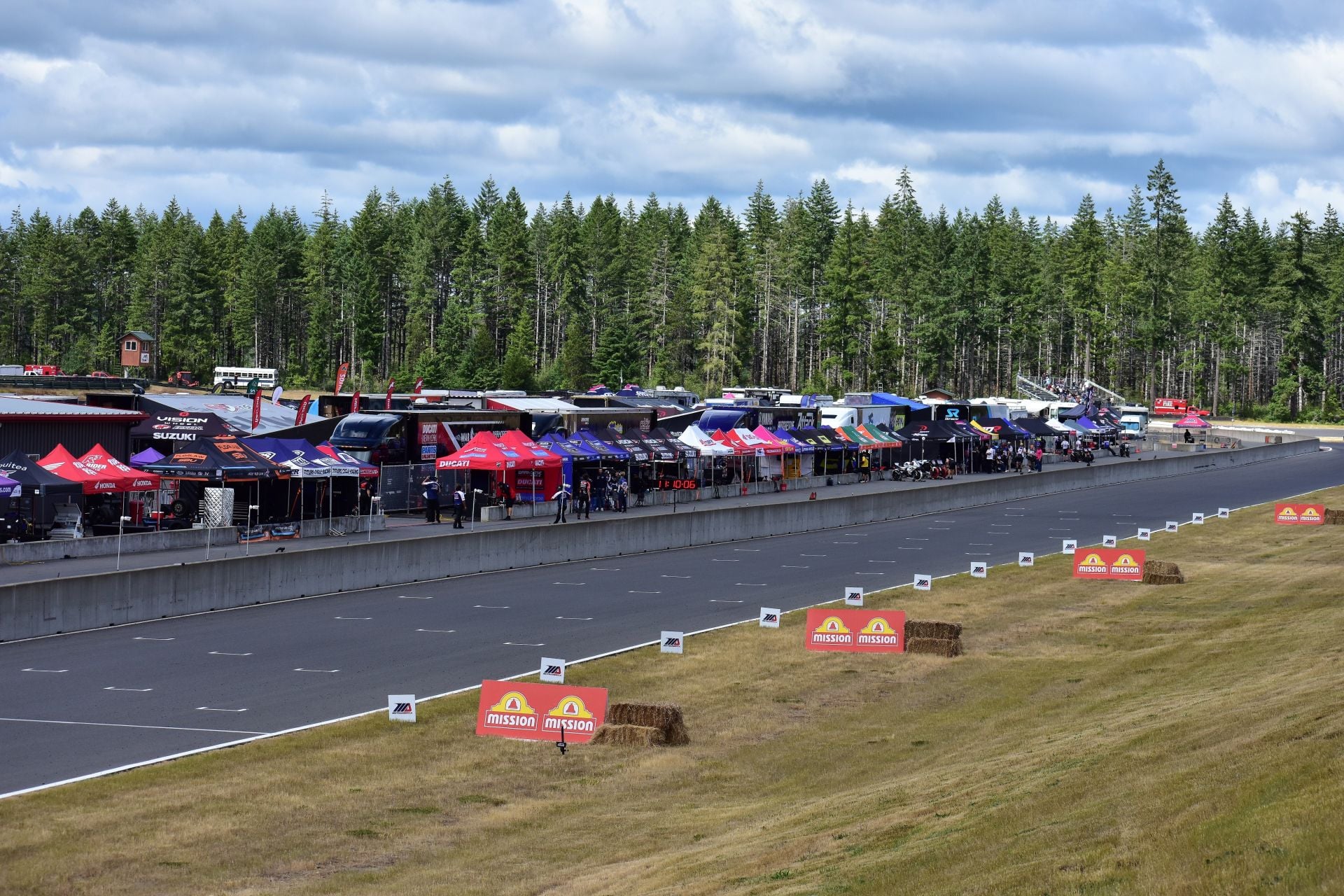
What Happened on Saturday at The Ridge
Corey Alexander, representing ARCH Motorcycle Racing, crossed the line first in Mission Super Hooligan Race One at Ridge Motorsports Park. Behind him, BPR Racing Yamaha's Andy DiBrino held on for second, and CoatzyMoto_LatinWe's Robertino Pietri claimed third. That's the podium — three riders, three different programs, and the kind of hard-fought finish that defines what the Hooligan class is about.
The Ridge is a technical circuit. It demands machinery that's properly set up from top to bottom: suspension dialed for elevation changes and mid-corner loading, power delivery that doesn't bite you when you're leaned over on exit, and braking hardware that doesn't fade under repeated hard stops. When you watch Hooligan racing at a track like this, you're not just watching riders go fast — you're watching the entire build philosophy get stress-tested in real time.
Why the Super Hooligan Class Matters to Your Build
If you're not following the MotoAmerica Mission Super Hooligan National Championship, you're missing the most direct connection between professional motorcycle racing and the parts you bolt onto your own bike. This isn't prototype machinery with aerospace budgets and factory-spec electronics. These are V-twin-powered machines — American iron, largely — built under production-based rules that keep the DNA recognizable.
That matters. When a Hooligan racer figures out which performance suspension setup survives a full race weekend at a technical road course, that information is actionable for your Street Glide or Road Glide. When teams chase exhaust flow and airflow balance to maximize torque out of corners, they're solving the same problems you're solving in your own garage. The race results from Saturday at The Ridge aren't just headlines — they're data points.
Suspension: The Silent Factor at The Ridge
Ridge Motorsports Park doesn't forgive lazy suspension tuning. The track sits in western Washington hill country and features significant elevation change, blind crests and a mix of slow technical corners with faster sweepers. For any V-twin platform competing here, getting the chassis geometry and damping right isn't optional — it's the difference between a podium and a DNF.
For your own bagger, this is the exact argument for moving past OEM suspension hardware. A quality rear shock upgrade gives you adjustable preload and damping so you can actually tune the bike to your weight, your riding style and the roads you run. Front end work matters just as much — progressive fork springs change how the front tracks under hard braking and how it loads mid-corner. Watching Hooligan racers work through these problems at race pace just confirms what performance bagger riders have known for years: the stock suspension setup is the first thing that has to go.
Preload, Damping and Why Race Setups Translate to the Street
Race teams don't tune suspension on feel alone. They start with baseline settings, collect data through practice sessions and make incremental changes. You can apply the same discipline to your build. Set baseline preload based on your sag measurement, adjust rebound damping until the rear doesn't pack up through a series of bumps, and fine-tune compression until the bike feels planted under hard acceleration. It's the same process whether you're chasing a podium at The Ridge or running canyon roads in the Angeles National Forest.
Power Delivery: Torque Wins Hooligan Races
Hooligan racing rewards torque, not peak horsepower. At most road courses, corner exit acceleration matters more than top-end power — the bike that hooks up cleanest and pulls hardest from 30 mph to 80 mph on the way out of a slow corner wins more corner battles than the bike making peak power on a long straight.
For Milwaukee Eight platforms, that means the cam selection, air cleaner and exhaust have to work together as a system. A well-chosen performance camshaft optimized for mid-range torque will hit harder in the rpm range you actually use on a road course — and on the street, that same cam makes your bike feel dramatically more responsive in everyday riding. Pair that with a high-flow air cleaner that removes the restriction from the intake side, and you've addressed both ends of the breathing equation.
On the exhaust side, a full performance exhaust system is still where the biggest gains live for most Milwaukee Eight builds. The OEM exhaust system is engineered around emissions compliance and sound regulations, not flow efficiency. A properly designed header and muffler combination changes the entire character of the engine — better throttle response, stronger pull through the mid-range, and a sound that actually reflects what the motor is doing.
Fueling and Tuning: Where the Build Comes Together
You can bolt on the best cam, the best exhaust and the best air cleaner in the business and still leave serious power on the table if the fueling isn't right. This is where a lot of performance bagger builds stall out — riders invest in hardware and then run the bike on stock fuel mapping that was never designed to support that hardware.
A proper tune on a fuel management tuner closes that gap. Whether you're running a Power Vision, a Screamin' Eagle Pro Street Tuner or another device, the goal is the same: get the air-fuel ratio correct across the entire rpm and throttle-position map so the engine makes the power the parts are capable of making. Dyno time is worth every dollar. Teams running in the Super Hooligan class know that a good tune can be worth more than another bolt-on — the same principle applies to your build.
Closed-loop tuning systems have made this more accessible than it used to be. Autotuners can trim fueling in real time based on wideband O2 feedback, which means your tune stays accurate as conditions change. But for a build with significant cam and exhaust changes, a custom dyno pull with a skilled tuner is still the gold standard.
Brakes: The Part Riders Forget Until They Need Them
At a track like The Ridge, braking performance is a defining factor. Hard stops from speed into tight corners, repeated across 15 or 20 race laps, expose every weakness in a braking system — pad compound, rotor condition, caliper performance and line quality all show up under that kind of sustained stress.
For street performance bagger builds, the braking upgrade conversation often gets skipped in favor of power mods. That's a mistake. Upgrading to performance brake pads with a compound that offers better initial bite and more consistent feel under heat is a legitimate safety and performance improvement. If your build is making serious power — boosted or naturally aspirated — a larger or higher-performance rotor upgrade gives the pads more surface area and better heat dissipation. Better braking lets you ride deeper into corners with confidence, which is faster on track and safer on the street.
What Alexander's Win Means for the Championship
Corey Alexander's Race One win at Ridge Motorsports Park puts ARCH Motorcycle Racing in a strong position heading into the remainder of the MotoAmerica season. The Super Hooligan National Championship is a points game — every race weekend counts, and consistency matters as much as outright speed. DiBrino's second for BPR Racing Yamaha and Pietri's third for CoatzyMoto_LatinWe keep both programs in contention. The championship picture remains tight, and Race Two results from The Ridge will add another layer to what is shaping up to be a genuinely competitive season.
For performance bagger riders watching from the paddock or from home, the story is the same every weekend: well-built, well-tuned V-twin machines are competitive on real road courses against real competition. That's not a marketing claim — it's the race result.
Build Your Bagger to Race-Ready Standards
Corey Alexander's win at Ridge Motorsports Park is a reminder that the performance bagger platform is a legitimate racing platform — and the same principles that win Hooligan races translate directly to your own build. Suspension that's actually tuned for how you ride. A cam, air cleaner and exhaust combination that works as a system. Fueling that's dialed to match your hardware. Brakes that perform when you need them.
You don't need a race team budget to build a bike that reflects those standards. You need the right parts, sourced from suppliers who understand what performance actually means on a V-twin platform. Start with your performance exhaust system to unlock the power your Milwaukee Eight is already capable of, then work through the full build from there. Shop our complete suspension upgrades collection at vtwinbikers.com and find everything your bagger needs to perform at the level the Hooligan class proves is possible.