

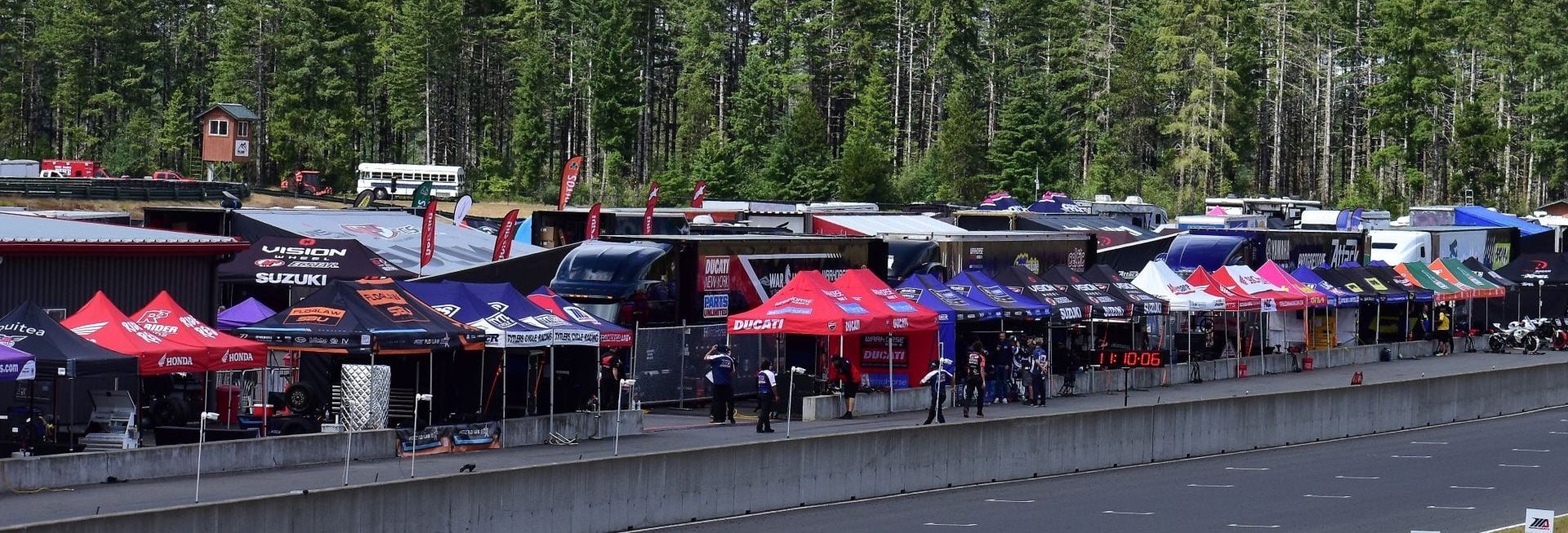
Andy DiBrino and the BPR Racing Yamaha outfit came to The Ridge Motorsports Park in Shelton, Washington and left with exactly what they came for — another win. If you've been watching the MotoAmerica Mission Super Hooligan National Championship unfold this season, you already know this class is the rawest, most relevant form of closed-course motorcycle racing for riders who actually tour, hoon, and build. These aren't prototype exotics. They're purpose-built machines descended from the same DNA sitting in your garage right now, and the parts that win races on Sunday have real street applications on Monday. If you're serious about wringing every ounce of performance out of your bagger or V-twin platform, what happens at The Ridge is required viewing.
Race 2 Results: DiBrino Locks Up Another One
BPR Racing Yamaha's Andy DiBrino took the Race 2 victory in the MotoAmerica Mission Super Hooligan class on Sunday at The Ridge Motorsports Park. It wasn't a fluke — DiBrino had already topped the warmup session earlier in the day, so the pace was clearly there from the jump. When a rider goes quickest in warmup and then converts it into a race win, that's a program firing on all cylinders: the setup is dialed, the engine package is making the right power at the right points in the rev range, and the rider has the confidence to push it.
ARCH Motorcycle Racing's Corey Alexander came home second. ARCH is no stranger to this class and Alexander's consistent podium presence makes him one of the championship contenders you can't sleep on. Third went to BPR Racing Yamaha's Bryce Kornbau — a 1-3 result for the BPR outfit on the same afternoon means that team's engineering and preparation are as much a factor as any individual rider's talent.
OrangeCat Racing's Josh Herrin finished fourth. Herrin has the road racing pedigree to run at the front in any class he enters, and his presence in the Hooligan field adds legitimate depth to the championship. Rodio Racing's Gus Rodio rounded out the top five. Five different riders representing five different programs in the top five — that's a healthy, competitive class.
Why Hooligan Racing Matters to Performance Bagger Riders
The Super Hooligan class exists in a space that's philosophically aligned with everything the performance bagger community cares about. The rules demand production-based engines. The machines are heavy by road racing standards. Ground clearance is limited, braking is a serious challenge, and getting power to the ground without lighting up the rear requires real suspension and chassis tuning. Sound familiar? It should — these are the exact same problems you're solving when you're building a King of the Baggers-style Road Glide or Street Glide for the track or even aggressive canyon riding.
The engineering solutions that work in Hooligan racing — optimized exhaust flow, aggressive cam timing, suspension that handles both corner-entry braking and mid-corner load — translate directly to what you're bolting onto your bike. When DiBrino goes out and posts the fast time in warmup on a machine making serious horsepower from a production-based platform, that's proof of concept for the entire performance V-twin aftermarket.
A performance exhaust system is one of the first places power gets unlocked on any big-twin platform. Hooligan bikes run full exhaust systems optimized for peak flow at race RPM, and the gains are real. Pairing that exhaust with a high-flow air cleaner lets the engine breathe on both ends of the equation — you're not going to outrun a restriction on the intake side with headers alone.
The Chassis Side: Suspension Is Not Optional
One of the least-discussed but most visible factors in Hooligan racing is suspension performance. The Ridge Motorsports Park is a technical circuit — it demands a bike that transitions quickly and stays composed under hard braking. You can have the fastest engine in the paddock and still get eaten alive if your suspension is wallowing through corners or diving under braking.
For performance bagger riders, this is the direct translation: your stock suspension was engineered to a price point and a comfort standard, not a performance standard. If you're running your Road Glide or Street Glide hard — whether that's two-up canyon riding, track days, or building toward a King of the Baggers program — the suspension is the first thing that will expose itself as the weak link after you've made power.
Rear shocks designed for performance baggers give you the adjustability and spring rates that the OEM hardware simply doesn't offer. Combine that with upgraded front fork internals or a complete cartridge kit and your chassis becomes something you can actually trust at speed. This isn't about ride quality — it's about having a platform stable enough that your power mods actually translate into lap time or corner speed instead of getting lost in chassis flex and suspension drama.
Engine Packages: What the Top Hooligan Programs Are Teaching Us
DiBrino's BPR Racing Yamaha operation doesn't happen by accident. These top Hooligan programs invest serious engineering time and money into extracting every horsepower available within the rules. On the V-twin side of the performance world — which is where most of our audience lives — the same principles apply: you need the right cam profiles, the right cylinder head work, and an engine management system that can actually take advantage of the power you've freed up.
Camshafts are where personality lives in a V-twin engine. A stock cam profile is ground to work within emissions requirements and to protect an engine across a wide range of maintenance scenarios and fuel qualities. That's not the same as a profile optimized for making peak power and strong mid-range torque. An aftermarket Milwaukee-Eight camshaft is one of the highest-leverage bolt-in modifications you can make — the duration, lift and lobe separation angle changes what the engine wants to do and where in the RPM range it does it best.
But a cam change without proper tuning is a half-measure. The fuel management and tuning solution needs to reflect the new engine calibration. Richer at peak power, proper air-fuel ratio across the entire map, and ignition timing that matches the new breathing characteristics of the engine. This is what separates a parts-count build from an actual performance build — the calibration that ties it all together.
Corey Alexander and ARCH: The Boutique Builder Angle
Corey Alexander's second-place finish aboard the ARCH Motorcycle Racing entry is worth a separate note. ARCH Motorcycle is Keanu Reeves and Gard Hollinger's Los Angeles-based boutique manufacturer — the fact that they're fielding a competitive Hooligan program speaks to the class's legitimacy. This isn't a marketing exercise. Alexander has the road racing résumé to run at the front with any equipment, and putting him on a platform that's genuinely competitive means the ARCH machine is making real power and handling the technical demands of a circuit like The Ridge.
For the performance bagger community, the boutique angle matters because it reinforces what the best independent shops and builders have always known: a small, focused program with the right parts and the right tuning approach can beat a bigger operation that's just throwing money at standard parts. Your build doesn't need to be a corporate program. It needs to be engineered correctly.
That starts with lighting work — a high-output LED headlight conversion might seem like an aesthetic or safety item, but on a bagger that does any night miles or early-morning canyons, seeing the road clearly at speed is performance-relevant. It also includes the details most riders overlook, like high-performance brake pads that can handle repeated hard stops without fade — exactly the kind of fade resistance that Hooligan racers demand corner after corner at a technical circuit.
What's Next for the Hooligan Championship
The MotoAmerica Mission Super Hooligan National Championship continues to build momentum as one of the most organically interesting classes in American road racing. DiBrino's Race 2 win at The Ridge adds to what's shaping up as a compelling championship narrative — BPR Racing Yamaha has clearly built a program around consistency, with both DiBrino and Kornbau showing the speed to run at the front.
For the performance bagger community watching this series, the takeaway isn't just the results table. It's the engineering philosophy that gets displayed lap after lap: production-based platforms, pushed as hard as the rules allow, ridden by experienced road racers who can communicate what the machine needs to go faster. That feedback loop between racer and engineer is the same one that drives every good aftermarket product we carry.
Watch the standings tighten as the season progresses. Alexander's consistent presence at the front means BPR Racing Yamaha can't let their guard down, and Herrin's fourth at The Ridge suggests OrangeCat Racing has the speed to challenge the podium when the setup comes together fully.
Build Your Own Performance Platform
Every race result in the MotoAmerica Hooligan class is a reminder that the gap between a stock touring bike and a performance machine is closed by deliberate, engineered choices — not luck, not spending without purpose. DiBrino's win at The Ridge is built on exactly that kind of program. You can apply the same discipline to your build, starting with the parts that deliver the highest return on investment: exhaust flow, engine internals, suspension geometry and a fuel calibration that ties it all together.
Whether you're chasing lap times, building a King of the Baggers-inspired street machine or just want your Milwaukee-Eight to perform the way it should have left the factory, the foundation is the same. Start with a performance exhaust system that frees up the power your engine is already trying to make, add performance rear shocks that actually match your riding demands, and let our catalog do the rest. Shop our performance exhaust collection and bagger suspension upgrades at vtwinbikers.com — everything you need to build a machine that's as serious as the racing that inspires it.