

Every point on the board matters when the season turns toward its home stretch. At Mid-Ohio Sports Car Course this weekend, five of MotoAmerica's feature classes are back on track, and the championship gaps are tightening fast. If you follow King of the Baggers racing — and you should, because it's the most direct proof of what a properly built touring machine can do — this round at the legendary 2.4-mile, 15-turn Ohio circuit is one you don't sleep on.
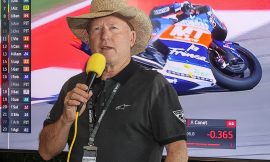
Why Mid-Ohio Matters for the Bagger Class
Mid-Ohio isn't a power track, and that's exactly what makes it brutal for the baggers. It's a flowing, technical road course that demands chassis balance, suspension compliance and corner-exit traction more than it demands outright top speed. The 15-turn layout constantly loads and unloads the front end, punishes bikes that push wide under braking and rewards setups that can rotate the rear without washing the front. That profile separates the properly built machines from the ones that are fast in a straight line and a handful everywhere else.
For the riders and teams campaigning in the King of the Baggers class, Mid-Ohio is a checkpoint. Championship points earned here carry the same weight as points earned anywhere else on the schedule, but the technical demands of this circuit have a way of exposing weaknesses in a build that a faster, more forgiving track might mask. Suspension tuning becomes the conversation. Tire wear becomes the conversation. Brake bias and corner entry speed become the conversation.
Think about what that means for your bagger suspension setup. The teams running at the front of the King of the Baggers class aren't doing it on stock damping. They're running fully adjustable setups — compression, rebound, preload dialed specifically for the track surface and rider weight. That level of tuning is available to you too, and Mid-Ohio is a good reminder of why it's worth the investment.
What the Championship Fight Looks Like Heading In
The source content makes clear that the battles across all five classes are tightening. When championship gaps compress this deep into a season, team strategy shifts. Riders who have been riding conservatively to protect a points lead start feeling pressure from behind. Teams that have been chasing start taking calculated risks to close the gap. Racing gets aggressive, mistakes get made and — critically for fans of the bagger class — technical execution at the bike level becomes the deciding factor between winning and losing ground.
For King of the Baggers specifically, the machine regulations keep the bikes recognizable as production-based Harley-Davidson and Indian touring models. That connection to what you're riding on the street is the whole point. The engine work, the exhaust systems, the air management — all of it has a direct lineage to bolt-on performance you can put on your own Road Glide or Street Glide.
The performance exhaust system on a race-prepared touring bike isn't just for sound. It's about scavenging efficiency, header diameter optimization and reducing backpressure across the RPM range the Milwaukee Eight actually lives in when you're charging out of a corner. Mid-Ohio's layout, with its multiple linked corners and short straights, puts premium value on corner-exit power delivery — which means the exhaust has to be right, the cam timing has to complement it and the tune has to tie everything together.
The Engine Package That Wins at a Technical Track
Let's talk about what makes a bagger fast at a circuit like Mid-Ohio versus, say, a layout with longer straights and heavier braking zones.
At a power track, peak horsepower wins arguments. At Mid-Ohio, torque curve shape matters more. You want a motor that pulls hard from lower RPM, builds smoothly through the mid-range and doesn't go flat before the exit of a linked corner sequence. The Milwaukee Eight platform — particularly the 117 and 131 cubic inch variants — responds extremely well to cam upgrades that broaden the torque curve rather than just moving peak power up the RPM range.
A performance cam upgrade on a Milwaukee Eight touring bike will change the character of the engine in exactly the right way for technical track work. More lift and optimized duration opens the door to better cylinder filling at mid-range RPM, and when you pair that with a properly matched high-flow air cleaner, you're building a package that breathes better across the board rather than just at wide-open throttle.
The teams at King of the Baggers level have validated this formula at the highest level of bagger racing. The street application is the same principle at a different power ceiling.
Tuning the Package Together
Here's where a lot of street builds fall apart: parts are added without proper tuning to match. A cam swap without a re-flash is leaving power on the table — at best. At worst, you're running lean in a part of the RPM range that creates heat and long-term reliability problems. The same is true for exhaust. A fuel management tuner isn't optional when you're making significant airflow changes. It's the part that makes everything else work correctly.
At Mid-Ohio, the teams are running bikes that are tuned specifically for the session — fuel maps adjusted for temperature, altitude and the specific power delivery demands of the track layout. Your street bike needs that same cohesion. A dyno session with a good tuner after your intake, cam and exhaust work is the difference between a build that's fast and a build that's fast and reliable.
Chassis and Braking: The Mid-Ohio Conversation
We already touched on suspension, but the braking side of the chassis equation deserves its own space. Mid-Ohio has several corners where the braking zone is short and the entry speed is high. For a machine that weighs over 700 pounds fully fueled — which a production-based touring bike does, even in race trim — brake system performance is critical.
The race teams are running big brake setups with high-performance pads and braided stainless lines to eliminate the compressibility you get in rubber OEM hoses under repeated hard braking. That setup translates directly to the street. Braided stainless brake lines give you a firmer, more consistent lever feel under all conditions, and performance brake pads with a higher coefficient of friction mean you're getting more stopping force for the same lever input.
On the suspension side, the front forks on a King of the Baggers machine are extensively modified — spring rates, damping valving and oil viscosity are all selected for the specific demands of road course racing. Your street bike doesn't need race springs, but upgrading to a quality fork cartridge kit changes the front-end feel dramatically. Less dive under braking, better tracking through turns, more feedback from the front tire — those aren't just race benefits. They're safety benefits on the street too.
Five Classes, One Championship Narrative
Beyond the bagger class, MotoAmerica's card at Mid-Ohio includes middleweight, production twins and hooligan machines alongside the baggers. The variety of motorcycle categories under one competitive umbrella is part of what makes MotoAmerica events worth watching even if King of the Baggers is your primary interest.
The hooligan class, built around American V-twin singles and twins, has its own technical story. The production twins class keeps engineering solutions close to what's available to the street rider. Every class on the card reinforces the same core idea: the modifications that make motorcycles faster, more predictable and more capable at the racing level are the same categories of modifications that improve your street bike.
For anyone who watches King of the Baggers racing and then looks at their stock Road Glide or Street Glide in the garage — this is the throughline. The gap between what those race machines do and what your bike does isn't technology that's out of reach. It's bolt-on parts, proper tuning and good suspension work. The series exists partly to prove that.
Points Are Currency — And So Is Your Build Budget
This deep in the MotoAmerica season, every point is currency. Teams and riders know exactly what they need from each remaining round to take a championship. They're optimizing every variable they can control — setup, strategy, tire choice — because the ones they can't control will take care of themselves on race day.
Your build works the same way. Every dollar you put into the right modification buys you something — power, handling, braking performance, reliability. The question is whether the parts you're choosing work together the way the race teams' packages do. A lightweight bagger wheel upgrade changes unsprung weight and gyroscopic effect. A cam and exhaust combination changes power delivery. A suspension upgrade changes how the whole bike communicates with the road. Done right, these things compound. Done wrong — bolted on without tuning or complementary work — they underperform.
The Mid-Ohio round of MotoAmerica is a reminder that building a motorcycle for performance is a systems exercise, not a parts list. The teams winning at this level understand that. So should you.
Follow the Racing, Build Your Machine
Mid-Ohio is going to produce championship moments this weekend. The bagger class is going to deliver hard racing on a technical circuit that rewards every aspect of a well-built machine — power delivery, chassis compliance, braking performance and tuning precision. Watch it and take notes.
Then come back to the garage and start closing the gap between your touring bike and what you see on track. Start with the parts that have the broadest impact: exhaust, intake, cam work and a proper tune. Build from there into suspension and braking. Do it in a logical sequence and tune as you go.
Shop our performance exhaust collection and suspension upgrades at vtwinbikers.com — everything you need to build a touring machine that performs like the ones you're watching at Mid-Ohio.