

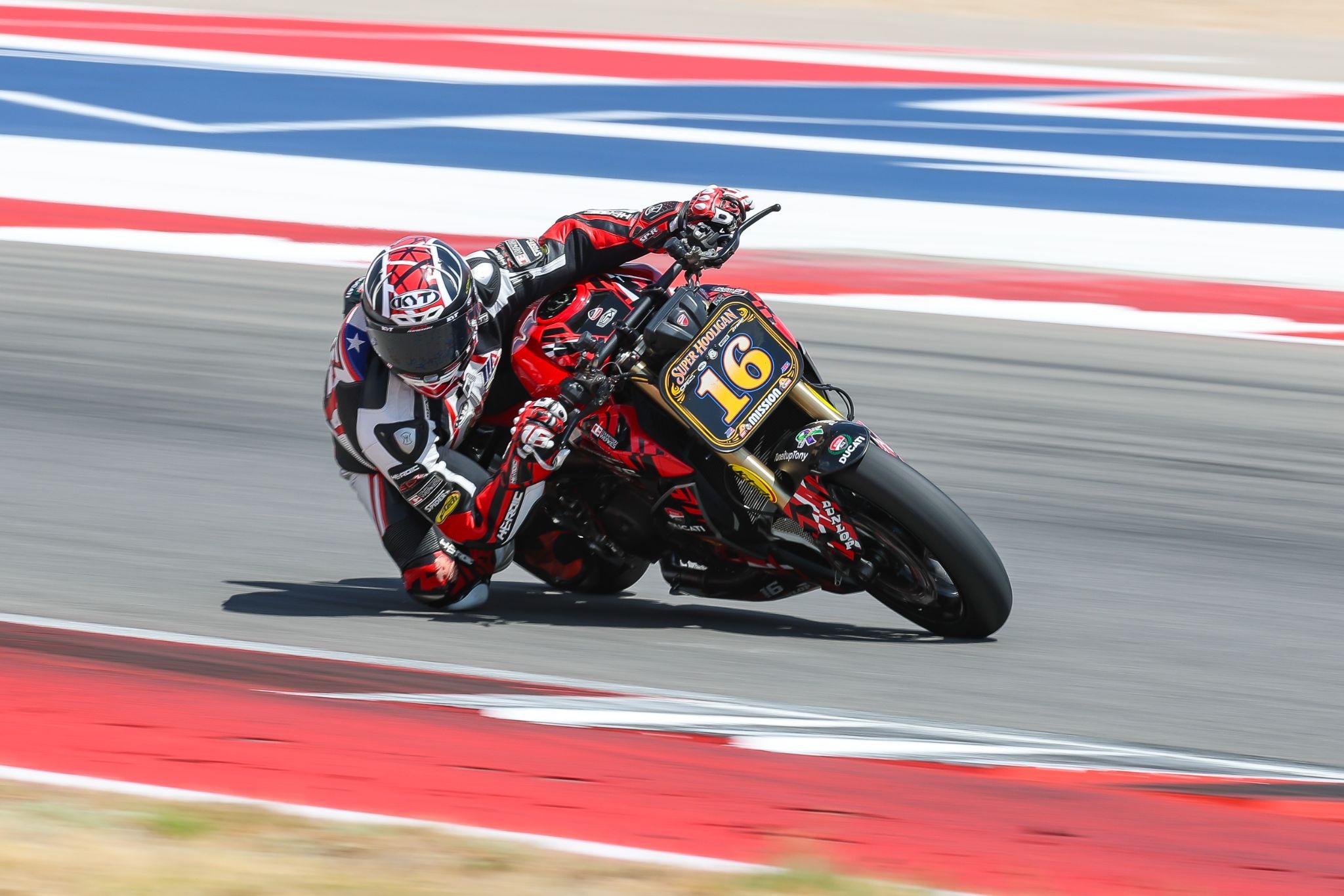
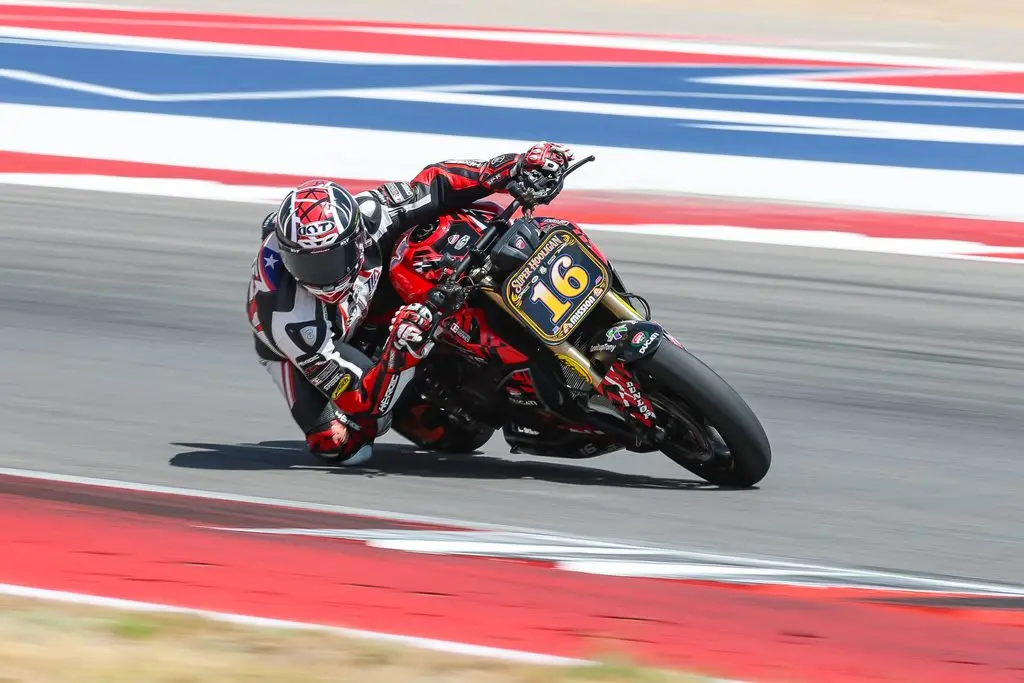
Privateer racing in the Mission Super Hooligan National Championship isn't for the soft. No factory budget, no deep-pocketed sponsor fleet, no team of engineers standing behind the pit wall with laptops — just a rider, a crew, and a machine built to compete. AJ Peaslee and AJ Peaslee Racing showed up at Circuit of The Americas (COTA) for MotoAmerica Superbikes at Texas and turned a randomly drawn 21st qualifying position into something worth talking about, and the MotoAmerica VIP Superfans made sure the whole paddock heard about it.
What the Super Hooligan Class Actually Demands
If you're not familiar with the Mission Super Hooligan National Championship, here's the short version: production-based V-twin motorcycles — the kind that roll off showroom floors in Milwaukee and then get torn apart in garages across the country — go door-to-door on full road-racing circuits. COTA isn't a parking lot autocross. It's a 3.41-mile, 20-turn FIA-Grade-1 circuit that hosts MotoGP. When a bagger-derived V-twin is flat out down the back straight at that track, every component decision you made in the build is being stress-tested simultaneously.
The ruleset keeps the class honest. Engines must retain their factory architecture. Chassis modifications are controlled. That means the gap between a privateer like Peaslee and a well-funded team comes down to smarter parts choices, sharper tuning and sheer riding ability — not an unlimited checkbook. It also means what works at COTA is directly relevant to what works on YOUR street bike or weekend canyon carver.
For a privateer running 21st on the grid, getting to the front requires a bike that pulls hard out of slow corners. COTA has some brutally tight sections — turns 12 through 15 are a technical carousel that destroys corner exit speed if your power delivery isn't dialed. A performance camshaft upgrade is frequently the first move serious Super Hooligan builders make because valve timing changes the character of the entire powerband, not just peak numbers.
The Fan Factor: Why the VIP Superfans Program Changes Everything
Here's what made this weekend different from a standard race report: the MotoAmerica VIP Superfans program randomly selected a qualifying position — 21st — and that number was Peaslee's grid slot. The Superfans who drew that number locked onto his campaign for the weekend, and the energy that followed was the kind of organic, loud, genuine support that factory teams spend marketing dollars trying to manufacture.
Privateer racers live and die by attention. Sponsorship follows eyeballs. Parts vendors notice when a rider has a vocal fanbase. The Superfan program creates a real connection between race fans and the competitors who are most like them — people who built something with their own hands and pointed it at a professional circuit to see what happens.
That story resonates with performance bagger builders because it's the same mentality. You're not Screamin' Eagle. You're not a Vance & Hines factory effort. You're someone who knows what your Milwaukee Eight responds to, who has spent hours on the dyno dialing in fuel maps, who made a calculated decision about which high-flow air cleaner would give you the intake charge your engine needs without destroying low-end torque. That's the privateer mindset applied to the street.
Building a Hooligan-Competitive V-Twin: The Parts That Matter
Let's talk about what it actually takes to make a production V-twin competitive in a class where the engine architecture is controlled but the tuning is not.
Exhaust
Flow is everything. The stock exhaust on any touring platform is a compromise — it's designed around noise regulations, heat management and cost. On a race circuit, it's leaving power on the table at every point in the rev range. A full performance exhaust system that opens up the headers and reduces back pressure changes the scavenging characteristics of the engine. Pair that with re-jetting or reflashing the fuel management system and you've addressed the two biggest choke points on the stock power delivery.
Racers in the Super Hooligan class run exhausts that are aggressive by any standard. The sound at COTA when a field of V-twins goes through the esses is visceral in a way that four-cylinder bikes simply are not.
Suspension
COTA's surface has bumps, compression zones and camber changes that punish a stock suspension setup. Any suspension component that was tuned for highway comfort becomes a liability when you're trail-braking into a decreasing-radius corner at race pace. Competitive Super Hooligan bikes run suspension that's been rebuilt, resprung or replaced entirely.
For YOUR street or canyon build, the logic is the same even if the pace is different. A set of properly valved performance bagger shocks transforms how a heavy touring platform handles mid-corner inputs. The weight doesn't disappear — it gets managed. That's the difference between a bike that runs away from you and a bike that you're actually driving.
Brakes
A 21st starting position at COTA means traffic. Lots of it. The ability to brake later than the rider next to you — and do it consistently lap after lap without fade — is a real competitive advantage. Upgraded performance brake pads and stainless braided brake lines reduce both fade and the mushy feel that stock rubber lines develop under hard use. On a heavy V-twin platform, braking performance is even more critical than on a lighter machine because you're carrying more momentum into every corner.
Fueling and Engine Management
This is where privateer racers who know their platform earn their starting positions back. Stock fuel mapping is a broad compromise. A tuned map built on an actual dyno, with the specific combination of parts on YOUR specific engine, is worth real horsepower and — more importantly — real rideability. Throttle response, fueling consistency at partial throttle, power delivery out of corners: all of it improves when the map matches the engine.
For Milwaukee Eight-based builds, an aftermarket fuel tuner or full standalone ECU upgrade is the difference between a pile of bolt-ons that don't work together and a cohesive package that makes more power than the sum of its parts.
What a 21st Qualifying Position Actually Means
Let's not gloss over the starting position storyline. Drawing 21st on the grid randomly, and then making that a talking point rather than a footnote, says something about Peaslee's approach to the weekend. In road racing, grid position is currency. Starting 21st means every rider ahead of you is an obstacle. It means your first lap is survival and traffic management before it's ever racing.
For a privateer with no factory support, charging through traffic at COTA requires a bike that's both fast AND consistent. A machine that makes huge peak power but goes soft in the middle of the rev range is difficult to manage in close quarters. The best privateer builds are tuned for the real world of a race — which includes traffic, tire degradation, fuel load changes and the physical fatigue that comes from wrestling a heavy platform through 20 turns at race pace.
That consistency argument translates directly to street and canyon builds. A bike tuned for a broad, usable powerband with suspension that's calibrated for real inputs is faster in the real world than one optimized purely for peak dyno numbers.
The Privateer's Advantage: No Excuses, Real Results
Factory efforts have resources. They also have politics, parts approval chains and the pressure of corporate optics. A privateer like Peaslee builds what works, strips what doesn't and answers only to the lap timer.
That same freedom applies to your build. Nobody is telling you which performance intake manifold to run or which cam profile fits their marketing calendar. You can make decisions based entirely on dyno data, real-world feedback and the specific way you ride. The Super Hooligan class proves every weekend that a rider who knows their machine and has it properly sorted can compete against far better-funded operations.
The VIP Superfan program putting a spotlight on Peaslee at COTA wasn't just a feel-good fan story. It was a reminder that the best parts of motorcycle racing have always been built from the bottom up — by riders who obsess over their machines, by fans who understand the effort involved, and by the community that forms around both.
Take the Privateer Mentality Into Your Own Build
AJ Peaslee racing a privateer effort at COTA on a randomly assigned 21st grid position — with a section of the grandstand locked in behind him — is exactly the kind of story that reminds you why the performance V-twin world is worth being part of. It's not always about the factory effort. Sometimes it's about the rider who built something real, pointed it at a serious circuit and made noise.
Your Road Glide, your Street Glide, your bagger — it deserves that same level of intent. Whether you're chasing lap times, canyon pace or just the satisfaction of a properly sorted machine, the parts decisions you make now determine what you're working with when it matters.
Start with your exhaust and fueling — the two places where stock components leave the most performance behind. Add suspension that actually handles your weight and your riding. Build toward a package that works together instead of a collection of parts that fight each other. Shop our performance exhaust systems and our bagger suspension upgrades at vtwinbikers.com and build something that can run with the privateers.