

Privateers don't get factory budgets, factory wrenches or factory pull. What they get is raw belief in the build, a bike they've tortured on the dyno at odd hours, and whatever crowd energy they can draw. At MotoAmerica Superbikes at Texas, AJ Peaslee got all three — and at his home circuit, Circuit of The Americas, it hit different.
COTA, the Super Hooligan Class and Why It Matters to You
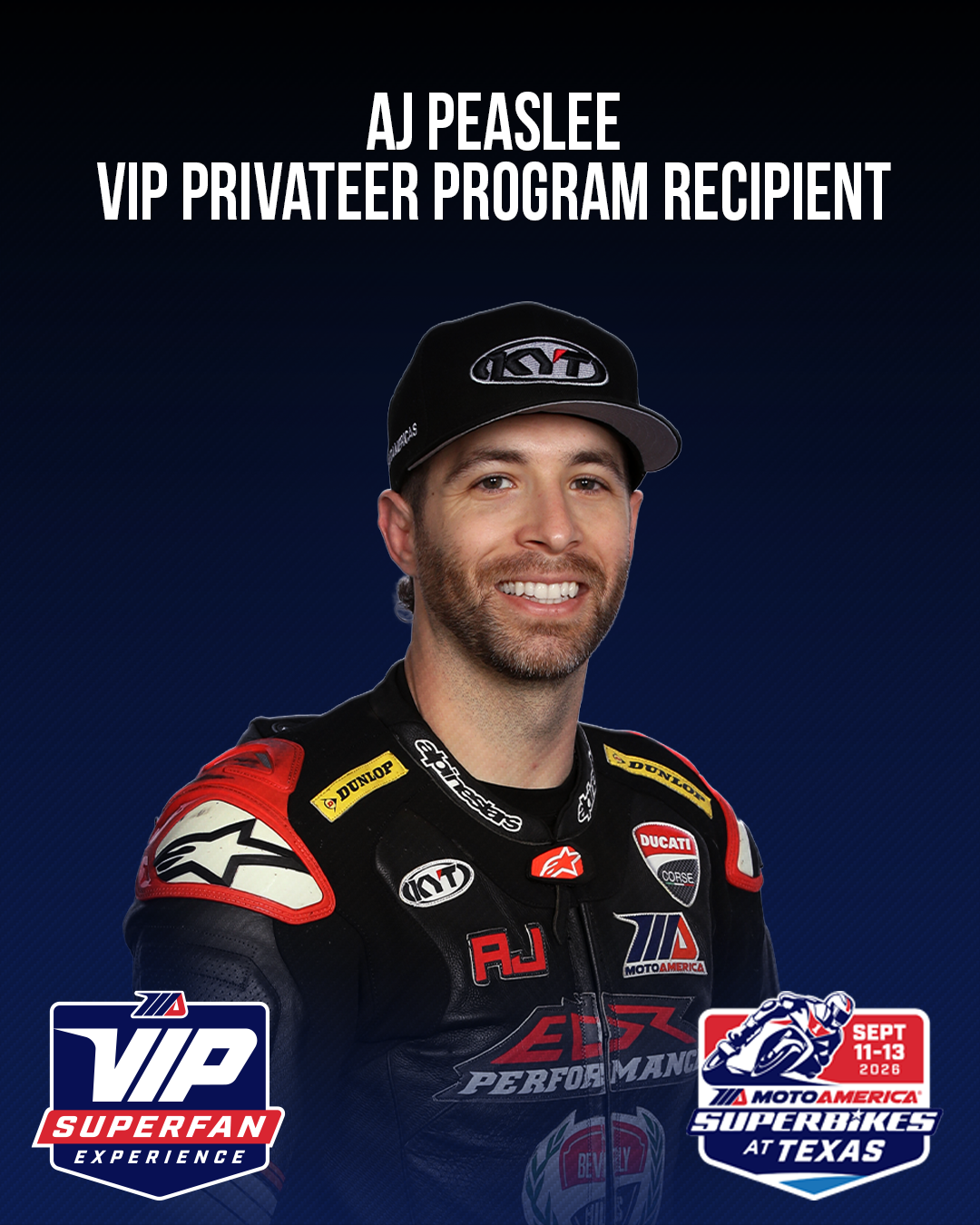
The Mission Super Hooligan National Championship is the class that made performance baggers credible on a road-racing circuit. We're talking production-based V-twin machines — the same platform sitting in YOUR garage — being thrown into corners at COTA, Laguna Seca and Daytona. When a privateer like AJ Peaslee (AJ Peaslee Racing) lines up against factory-supported programs with a bike he's built and tuned on a shoestring, every tenth of a second he pulls is a data point for what the platform can actually do.
That matters because the modifications keeping Peaslee competitive are the same categories of modifications available to any serious bagger builder. Exhaust flow, air intake, fueling, suspension geometry — none of that is magic. It's engineering. And understanding what makes a Super Hooligan bike fast is the fastest education you'll get on building yours.
A performance exhaust system is never just about sound. At this level it's about scavenging, backpressure management and header diameter matched to your cam profile. Peaslee's program lives and dies on getting that combination right.
The VIP Superfan Effect: Real Crowd Energy at a Road Course
MotoAmerica's VIP Superfan program puts selected fans in a paddock-adjacent position — close enough to see what the teams are actually doing between sessions, close enough to feel the heat rolling off a motor that's been wrung out on a road course. For a privateer racer, that direct fan connection isn't a perk. It's fuel.
At COTA, Peaslee's randomly selected qualifying position — 21st — became the lucky number that energized his Superfan contingent. A number pulled at random turned into a rallying point. That's the kind of organic momentum money can't manufacture. The crowd came in behind him, the paddock energy built, and Peaslee had what every privateer needs but rarely gets: a home-track atmosphere that actually felt like home.
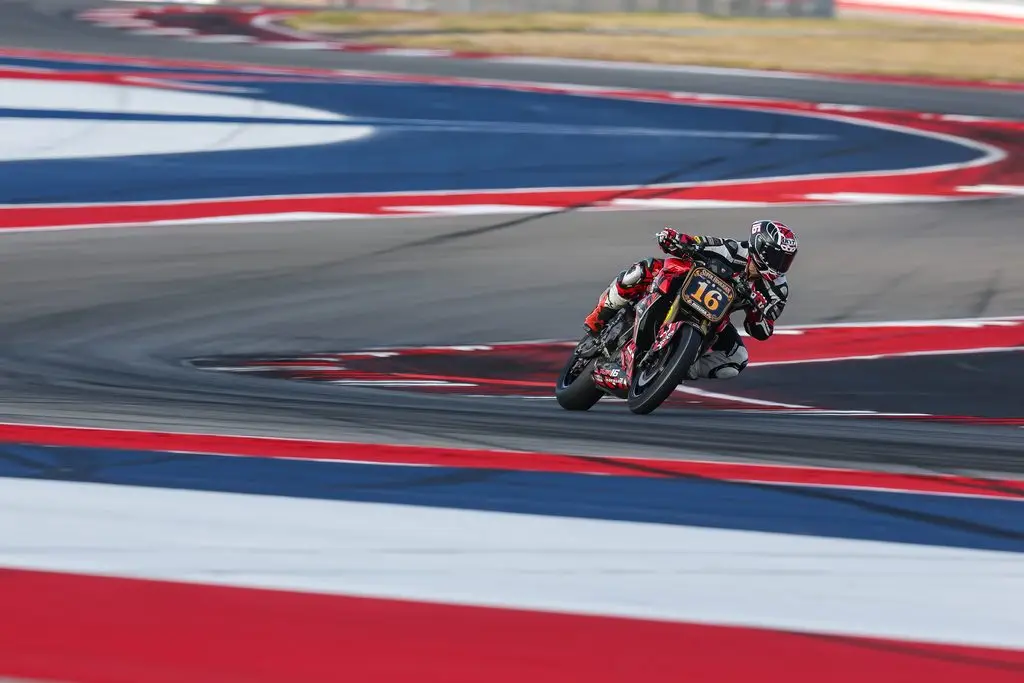
For those of us watching from the outside, the lesson is simple. The Super Hooligan class lives on this energy. It's a class built on accessibility — for riders, for builders, for fans who actually understand what a Milwaukee Eight sounds like at full song through a road-race pipe.
What Makes a Privateer Super Hooligan Build Different
A factory program throws resources at problems. A privateer solves problems with knowledge. Peaslee's program represents exactly the kind of disciplined, every-dollar-counts building that most performance bagger owners actually do in their own shops.
Here's where the dollars go on a competitive Super Hooligan build:
Breathing: Intake and Exhaust
You cannot make power on a stock air cleaner and stock exhaust. Full stop. The performance air cleaner dictates how much atmosphere you're feeding the motor before combustion even happens. Pair that with a race-spec exhaust system that pulls spent gases out efficiently and you've changed the character of the motor before you've touched a cam or a piston.
Flow bench numbers don't lie. If your intake and exhaust are choking the motor, the cam profile you chose is irrelevant. Privateer teams learn this fast because they can't afford to do things twice.
Camshafts: Where the Power Curve Lives
In a production-based class like Super Hooligan, camshaft selection is one of the highest-leverage moves you can make within the rules. Duration, lift, lobe separation angle — these numbers determine whether your motor makes power down low for corner exit or pulls hard at the top for straight-line speed. At a technical circuit like COTA with its mix of slow corners and long runs, cam selection is a genuine tactical decision.
A high-performance camshaft matched to YOUR engine's displacement and your exhaust and intake combination is the kind of part that shows up immediately on the dyno and on the track. It's also the kind of part that a privateer spends serious time researching before committing, because there's no budget for a redo.
Suspension: The Part Riders Ignore Until They're Losing
COTA is not a flat track. It has elevation change, late-apex corners and surfaces that will punish a bike with the wrong spring rate. A production bagger running stock suspension on a road course is leaving time on the table and potentially creating instability under braking. The suspension upgrades that competitive Super Hooligan builds run aren't exotic — they're properly valved, properly sprung units matched to the bike's weight, the rider's weight and the track surface.
If YOUR bagger is running stock suspension and you're serious about performance, this is the conversation to have before you talk about horsepower. A motor that makes 130 horsepower through a chassis that can't handle it is dangerous. Suspension is a safety and performance investment simultaneously.
Fueling and Tuning: The Last 10 Percent
Every hardware modification on the list above requires recalibration of the fuel delivery system. You cannot bolt on a cam, a pipe and an intake and expect the stock fuel map to serve you. A proper fuel management tuner is what translates hardware changes into actual power gains on the dyno. Without it, you're running rich or lean at the wrong points in the RPM range, leaving power down, risking the motor or both.
Privateer programs like Peaslee's live by this discipline. Every session on track feeds data back to the tune. The build is never finished — it's always being refined.
The Home Track Advantage: COTA as a Proving Ground
There is something categorically different about racing at your home circuit. You've walked the layout. You know where the pavement changes. You know where the track goes slick in the afternoon sun and where the grip comes back in the shade. For Peaslee at COTA, that local knowledge is a tangible asset that no factory budget can buy.
This kind of intimate track knowledge also applies to the bagger community broadly. The riders who know their machines the deepest — who've logged hours studying dyno sheets, who understand what their bike does in the heat, who've made thoughtful, sequential modifications — those are the riders who perform when it counts. That's the privateer mindset applied to street performance.
It's also why events like MotoAmerica Superbikes at Texas matter beyond the scoreboard. When Peaslee qualified 21st and his Superfan crew turned that into a rallying point, it demonstrated exactly what makes this class different from the major production classes. The gap between racer and fan, between what happens on track and what's possible in YOUR garage, is measurable. It's not infinite. That's the appeal.
Building With the Privateer Mindset
Peaslee's program at COTA is a case study in prioritization. Limited resources mean every modification has to earn its place on the bike. There's no room for vanity parts, no budget for redundancy. Every dollar goes toward measurable performance improvement.
For performance bagger builders, that discipline is worth adopting regardless of budget. Ask yourself what's actually limiting your bike right now. Is it the exhaust? The cam? The suspension? The fueling? Work down that list sequentially, starting with whatever is the most restrictive bottleneck in the system, and you'll build faster and smarter than riders who buy parts randomly.
A stage upgrade kit that packages intake, exhaust and a tune together is often the most efficient first move — it addresses the most common bottlenecks simultaneously and the components are matched to work together rather than being sourced piece by piece with compatibility questions.
The privateer ethos isn't just about racing on a budget. It's about knowing your machine deeply enough to make every modification count. It's about respecting the data — the dyno sheet, the lap time, the tire wear — and letting that data drive your decisions. Peaslee does it at COTA. You can do it in your own build.
Support Privateer Racing, Build Your Own Beast
AJ Peaslee's COTA run — backed by VIP Superfans who turned a randomly drawn qualifying number into genuine crowd energy — is exactly the kind of story that keeps the Mission Super Hooligan National Championship vital. It's a privateer, a production-based V-twin platform and a home crowd. Everything the class is supposed to be.
The performance modifications that keep Peaslee competitive are the same categories available to any bagger builder with a serious approach and the right parts supplier. Start with the basics — a performance exhaust that flows properly and a high-flow air intake — and work up from there with fueling, cams and suspension. Each modification builds on the last. Each one is a step closer to the kind of machine that belongs on a road course.
Shop our performance exhaust collection and air intake systems at vtwinbikers.com and start building the bagger that Peaslee's program proves is possible.