

Your bike isn't the problem. Your commitment might be. Cory West spent more than two decades clawing for rides, adapting to whatever machine he could bolt a number plate onto, and surviving a professional racing career that would have broken most riders — before finally standing on top of American motorcycle racing as the 2024 MotoAmerica Super Hooligan National Champion. Episode 40 of the Pipe Dreams Podcast puts a spotlight on that journey, and if you build or race performance baggers, this conversation is required listening.
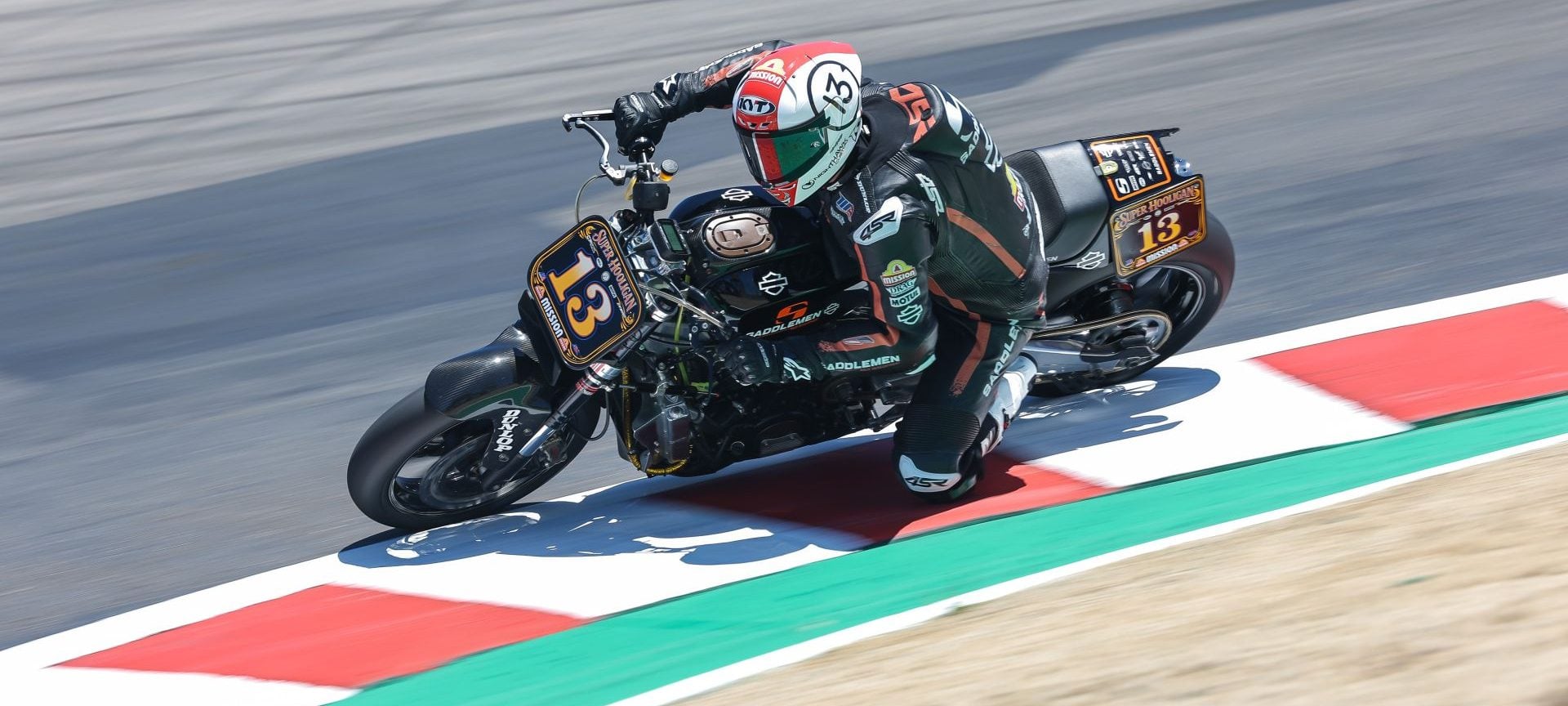
From Motocross Kid to AMA Superbike Rookie of the Year
West grew up a motocross kid out of Arkansas — dirt in the blood before asphalt ever entered the picture. That background isn't just biographical color. Riders who come up on dirt develop throttle feel, balance and crash survival instincts that translate directly when the tires get sticky on a road course. It's the same reason you see so many King of the Baggers front-runners with dirt or supermoto backgrounds; the fundamentals of managing a heavy, torquey machine at the limit are learned in the rough, not the smooth.
His transition to road racing produced early results. West earned AMA Superbike Rookie of the Year honors — a credential that puts him in genuinely elite company on the American racing ladder. That was the promise. What followed was years of the privateer grind: sourcing funding, chasing rides, adapting to whatever motorcycle landed in front of him that season. No factory contract, no deep-pocketed sponsor handing him a fully prepped machine. Just a rider who refused to stop racing.
If you've ever tried to build a competitive performance bagger on a real-world budget — chasing dyno numbers with a high-flow air cleaner here, a set of performance exhaust pipes there, always trying to extract more from what you have — you understand the mentality. You work with what you've got and you figure it out.
The Privateer Mentality and What It Teaches You About Machinery
Spend 23 years as a privateer and you become something that factory riders rarely are: a true mechanic-rider. When the team budget doesn't cover a crew chief for every session, you learn why the bike does what it does. You learn to read data without a data engineer standing next to you. You feel what the suspension is telling you because you're the one who set it up yourself.
West's adaptability across countless different motorcycles is exactly the kind of knowledge base that made him valuable when the sport began to evolve. King of the Baggers and Super Hooligan competition didn't just open new doors for Cory West — they opened doors for every rider and builder who understood that horsepower and handling aren't platform-specific skills.
For those building in the garage, that privateer approach to machinery is worth studying. Every performance dollar has to earn its place. That means prioritizing correctly: suspension before cosmetics, fueling before bolt-ons, tires before anything else. A set of performance bagger shocks and a proper fuel tuner will do more for your lap times — or your canyon carving — than any cosmetic upgrade you can bolt on a Saturday afternoon.
King of the Baggers Changed Everything
The growth of King of the Baggers racing fundamentally altered the American motorcycle racing landscape, and Cory West was positioned to capitalize on it in a way that many pure sportbike specialists were not. His versatility — the ability to ride anything fast — became a genuine asset rather than a resume footnote.
King of the Baggers put full-dresser touring bikes on MotoAmerica road courses and asked riders and builders to extract racing performance from machines that, stock, tip the scales well north of 800 pounds. That challenge required a complete rethinking of the performance equation. S&S Cycle, Vance & Hines, Screamin' Eagle and the aftermarket at large responded with race-bred components that filter directly down to production riders: high-compression pistons, race cams, big-bore kits, and aerodynamically optimized bodywork.
The Milwaukee-Eight performance cam kits that are now a staple performance upgrade on touring bikes owe part of their development momentum to the pressure King of the Baggers put on the aftermarket to produce proven parts fast. Racing is the laboratory. Your street bagger is the beneficiary.
Developing the Pan America Into a Championship Platform
Beyond his own racing results, West's work developing the Harley-Davidson Pan America into a championship-winning platform is a thread of the Pipe Dreams conversation that speaks directly to how professional racing informs product development. The Pan America is not a bagger — but the process of developing any Harley-Davidson platform for competition-level performance is the same: identify the weak links in the stock configuration, address them systematically, validate the changes under racing conditions and iterate.
That development process — rider feedback driving hardware decisions — is what separates purpose-built performance components from catalog parts. When a manufacturer says a component is race-validated, the question to ask is: validated by whom, on what surface, under what conditions? West's involvement in platform development represents the credible end of that claim.
For bagger builders, the lesson is to trust the parts that have proven themselves at the race level. A Milwaukee-Eight big bore kit that's been run in King of the Baggers competition has been stress-tested in ways that no dyno session alone can replicate. Sustained high RPM, repeated hard braking zones, full-throttle roll-ons out of slow corners — that's the proving ground that matters.
23 Years: What Persistence Actually Looks Like
The emotional weight of West's 2024 Super Hooligan championship — his first professional national title after 23 years as a pro — is not a small thing to process. Most riders are done by year five if success hasn't arrived. The ones who last two decades without a national title are almost never hanging around: they've moved into coaching, or team management, or they've walked away entirely.
West didn't. He balanced the demands of racing with family life, continued developing as a rider, adapted when the sport shifted under his feet and took his shot when King of the Baggers and Super Hooligan competition offered a new arena. That's not luck. That's the long game executed correctly.
For anyone building a performance bagger with serious intent — whether the goal is track days, King of the Baggers amateur events or just the fastest machine on your regular weekend ride — the principle applies directly. Build it right the first time, reinforce the weak points, and keep pushing. A high-output LED headlight upgrade isn't just visibility; it's the mindset of addressing every system, not just the engine. Suspension, brakes, lighting, fueling — the whole machine earns the result.
Where to Listen to Pipe Dreams Episode 40
Pipe Dreams Podcast Episode 40 is streaming now on Spotify, Apple Music and Amazon Music. Video of the full episode is available on MotoAmerica Live+, Spotify and YouTube. The podcast is hosted by MotoAmerica racers Corey Alexander and James Rispoli, and the Cory West episode — Episode 40 — is one of the more substantive conversations the show has produced.
Previous episodes have featured Kenny Roberts, Dallas Daniels, Gard Hollinger and Keanu Reeves of ARCH Motorcycle, and Roger Lee Hayden. The caliber of guests reflects where the show sits in the American motorcycle racing conversation: close enough to the paddock to get the real stories, not the press release version.
If you're serious about the performance bagger space — building, tuning or racing — following the conversations that come out of the racing community is part of the education. Cory West's 23-year career is a curriculum in itself.
Build Like a Privateer, Race Like a Champion
Cory West's career tells you something useful: the riders who endure are the ones who learn the machinery, not just the riding. They understand why the chassis does what it does, why the engine responds the way it responds, and what to change when it doesn't. That knowledge doesn't come from watching — it comes from wrenching, testing and making decisions with incomplete information under pressure.
Your performance bagger build is the same exercise on a different timeline. Every part decision is a test of priorities. Get the foundation right — the engine, the fueling, the suspension — before you chase the glamour upgrades. Start with proven components: a performance intake system that opens up airflow without creating a lean condition, an exhaust that's been properly engineered for the Milwaukee-Eight's exhaust pulse timing, suspension that keeps the front end planted when you're hard on the throttle out of a corner.
West proved that persistence and mechanical intelligence can ultimately overcome a lack of factory resources. Your build can reflect that same discipline. Shop our performance exhaust collection and our full lineup of Milwaukee-Eight bagger parts at vtwinbikers.com — everything you need to build a machine that earns its results, one proven component at a time.