

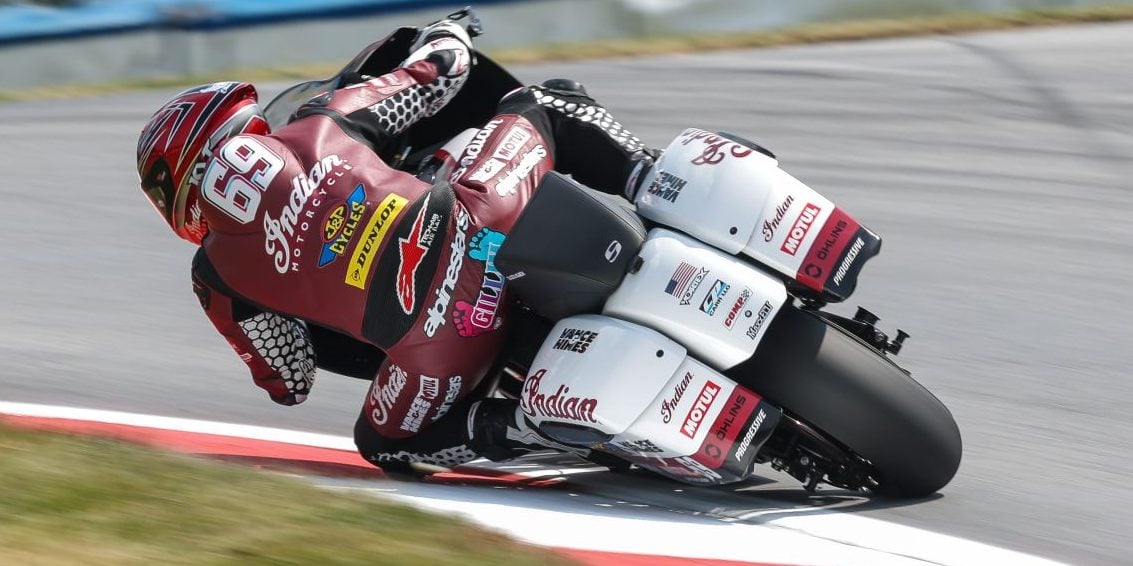
Hayden Gillim walked into Mid-Ohio's Sunday warmup session and made it look like a time trial. The J&P Cycles/Motul/Vance & Hines Factory Indian rider posted the quickest lap of the King of the Baggers warmup, leading an all-Indian top three that sent a clear message to the Harley-Davidson factory effort before a wheel was turned in anger. If you follow King of the Baggers closely, you already know these factory builds represent the absolute ceiling of what a performance bagger can do — and every part choice, tuning decision and chassis setup at this level eventually filters down to the bikes sitting in your garage.
The Warmup Results: Indian Owns the Top Three
Gillim's lap put him ahead of teammates Troy Herfoss and Rocco Landers, making it a factory Indian 1-2-3 in the warmup order. That kind of formation isn't luck — it's a statement about where the Indian Challenger platform is right now in terms of development, rider confidence and raw setup. Behind them, Harley-Davidson x Dynojet Factory Racing rider Kyle Wyman slotted into fourth, with Big Diehl x Harley-Davidson Factory Racing rider James Rispoli rounding out the top five.
Four of the five fastest bikes in warmup were factory-supported machinery, which tells you everything about the state of King of the Baggers competition. The gap between the factory builds and the privateer field has tightened over the years, but when you watch a warmup sheet dominated by full factory efforts, you understand why the parts and tuning choices these teams make deserve your attention. What works at 100 percent effort on a race circuit is a reliable indicator of what moves the needle on your street or track build.
Wyman and Rispoli keeping the Harley-Davidson banner in the top five matters too. The Milwaukee Eight platform that underpins Harley's King of the Baggers effort shares DNA with the engine in your Road Glide or Street Glide, and the development work those factory riders put on it every race weekend is directly relevant to the modifications that are worth making on your own bike.
Why the Warmup Session Matters More Than You Think
A lot of fans treat warmup as a throwaway — a few laps to scrub tires and check data. At this level it's anything but. Teams are collecting tire temperature data across the full surface of the contact patch, verifying suspension settings dialed in from Friday and Saturday practice, confirming fuel mapping under race-condition throttle inputs, and giving riders a chance to lock in their reference points after overnight setup changes.
When Gillim goes quickest in warmup, it tells you his performance exhaust system and fuel management package survived the overnight and are delivering consistent power from the first hot lap. It tells you his suspension is calibrated correctly for the track surface temperature and his tire pressures are where they need to be. Everything that matters for race pace shows up in warmup before it shows up on the results sheet.
For your own build, the lesson is the same: if your bagger suspension isn't set up correctly for your weight, your riding style and the roads you run, you're leaving performance — and safety margin — on the table before you even start thinking about the engine. The factory teams obsess over chassis setup because power means nothing if you can't put it down cleanly.
The Vance & Hines Factor
Gillim's bike wears the Vance & Hines name prominently, and that connection isn't cosmetic. Vance & Hines has been one of the defining forces in King of the Baggers since the series launched, developing exhaust and powertrain solutions that have directly shaped what production-derived performance pipes look like for street riders. The exhaust architecture on a full factory race build like Gillim's operates at a level of engineering refinement that most riders will never touch, but the principles — scavenging, backpressure tuning, header diameter relative to displacement — are identical to what you're working with when you bolt a Vance & Hines exhaust onto your Milwaukee Eight.
The reason the factory team's success at Mid-Ohio should matter to you is exactly that knowledge transfer. Vance & Hines doesn't develop race exhaust in a vacuum — those programs feed the product development pipeline for the street and street-performance market. When you see Gillim topping warmup sheets on a bike wearing that exhaust, you're watching proof-of-concept for the hardware that eventually lands in your hands.
Pair that exhaust work with proper fueling and you have a real combination. The Harley-Davidson x Dynojet Factory Racing partnership on Wyman's side of the garage is another live demonstration of that principle — Dynojet's Power Vision and Power Commander platforms are what makes a modified Milwaukee Eight actually run correctly after you've added pipes and an air cleaner. Bolt-on performance without tuning is money half-spent.
Building Your Milwaukee Eight to Match the Racing Philosophy
The top five at Mid-Ohio's warmup session breaks down into two platforms — Indian Challenger and Milwaukee Eight Harley-Davidson — and if you're riding a Harley touring bike, the Wyman and Rispoli programs are your most relevant data points. What the factory teams have proven across multiple seasons of King of the Baggers is that the Milwaukee Eight responds extremely well to a disciplined, layered approach to performance modification.
Step One: Breathe and Exhaust
Every factory racing program starts with airflow. The Milwaukee Eight in stock trim leaves meaningful power on the table through its air intake and exhaust restrictions. An high-flow air cleaner opens the intake side and gives the engine the volume of air it needs to make real power. Pair that with a full exhaust system and you've changed the breathing equation on both ends.
The factory teams run full exhaust systems engineered from the head flange back with no compromise for heat shielding, passenger clearance or noise ordinances. Your street build will make different choices, but the goal is the same: get exhaust gases out fast, with header dimensions that promote scavenging at the RPM range where you spend the most time.
Step Two: Fuel and Tune
This is where a lot of builds fall apart. Riders add exhaust and an air cleaner, feel the flat spot that appears under hard throttle, and wonder if the parts are defective. They're not — the stock fuel map wasn't written for your modifications. A fuel tuner or power commander lets you remap fueling across the entire RPM and throttle position range to match what you've actually built. The factory teams have dedicated tuners working on this every session. Your build deserves the same discipline.
Step Three: Camshafts
If you've already sorted breathing and fueling and you want more, camshafts are where the Milwaukee Eight's character gets transformed. The stock cams are ground for emissions compliance and broad streetability. A performance Milwaukee Eight cam — ground for more lift, more duration and optimized overlap — unlocks the top end the engine is capable of while keeping enough low-end torque to stay usable on the street. The factory race teams are running cam profiles that are well outside street-legal parameters, but the principle of cam selection relative to your target power band is directly applicable.
Step Four: Suspension
The King of the Baggers field showed the motorcycle world that a 900-pound touring bike can be made to handle. It didn't happen by accident. The factory teams run fully adjustable front and rear suspension components tuned specifically to the weight distribution and tire characteristics of their builds. For your street touring bike, that means a rear shock upgrade calibrated for your loaded weight is one of the highest-value modifications you can make. Stock rear shocks on most Milwaukee Eight touring bikes are undersprung for anything more than a single rider at moderate pace. Two-up riding, saddlebags loaded and aggressive cornering will expose that limitation immediately.
The Indian Challenger's Dominance: What It Tells the Field
Three Indian Challengers in the top three of warmup at Mid-Ohio isn't just a good day — it's a data point in a longer story about where platform development sits right now. The Indian Challenger has been refined aggressively since King of the Baggers began, and the factory effort behind Gillim, Herfoss and Landers is clearly well-sorted heading into this race weekend.
For Harley riders, that's motivation, not discouragement. Wyman and Rispoli in fourth and fifth means the Milwaukee Eight platform is still in the fight, and factory-level results in any warmup session reflect the accumulated work of engineers and tuners who believe in the platform's potential. The race itself is a different story from warmup — tire degradation, race traffic, fuel load management and rider decisions all compress the gap between setups that look dominant in a short warmup session.
What This Weekend Means for the Championship
Mid-Ohio is a technically demanding circuit with elevation changes, high-speed sweepers and a few corners that punish anything less than a perfectly set-up chassis. The fact that Gillim went quickest here — not on a flat, straightforward track but on a circuit that asks real questions of handling and chassis balance — suggests the Indian factory team arrived at this round with answers. Whether that translates to race day results across a full race distance under full competition conditions is the question the field will answer when the lights go out.
For the Harley-Davidson factory effort, Wyman and Rispoli in the top five means they're not conceding ground before the race starts. Both riders have the track experience and factory-level hardware to make things interesting when it counts.
Build Your Bagger Like the Factory Teams Do
King of the Baggers isn't just a race series — it's a 30-lap live demonstration of what a performance bagger can become with the right parts and the right tuning. Every session Gillim, Wyman, Rispoli and the rest of the field complete on track validates the technology that's available to you right now for your own build. The factory teams start with the same basic architecture you have in your garage: a large-displacement V-twin in a full-dress touring chassis. What they do with it — exhaust, fueling, cams, suspension — is exactly the playbook you should be following on your own Milwaukee Eight.
Don't wait for next season's parts catalog. The hardware that makes these race machines fast is available today. Start with a Vance & Hines exhaust system and a fuel management tune to get your Milwaukee Eight breathing and running correctly, then build from there. Shop our performance exhaust collection and our suspension upgrades at vtwinbikers.com and put the same philosophy the factory teams run at Mid-Ohio to work on your bike.