

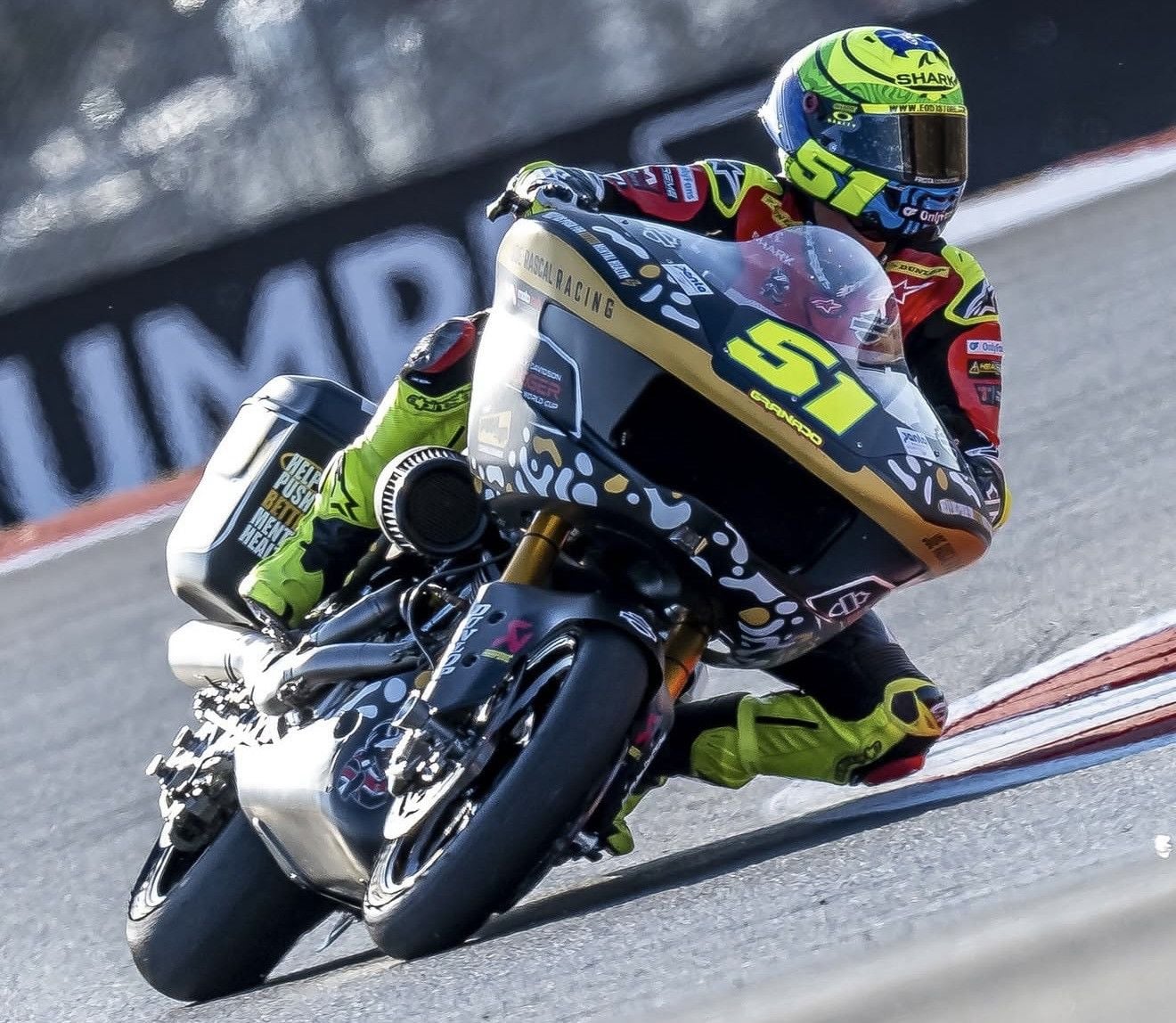
The FIM Harley-Davidson Bagger World Cup rolled into Silverstone Circuit in England and the Friday afternoon session made one thing crystal clear: Eric Granado and his Joe Rascal Racing Harley-Davidson are the combination to beat. If you've been watching the Bagger World Cup build momentum as a legitimate international road racing series, this weekend at one of the world's most demanding circuits is proof that heavy touring iron can be pushed to limits that would make most riders' heads spin — and that the hardware underneath these bikes matters more than ever.
What Happened in FP2 at Silverstone
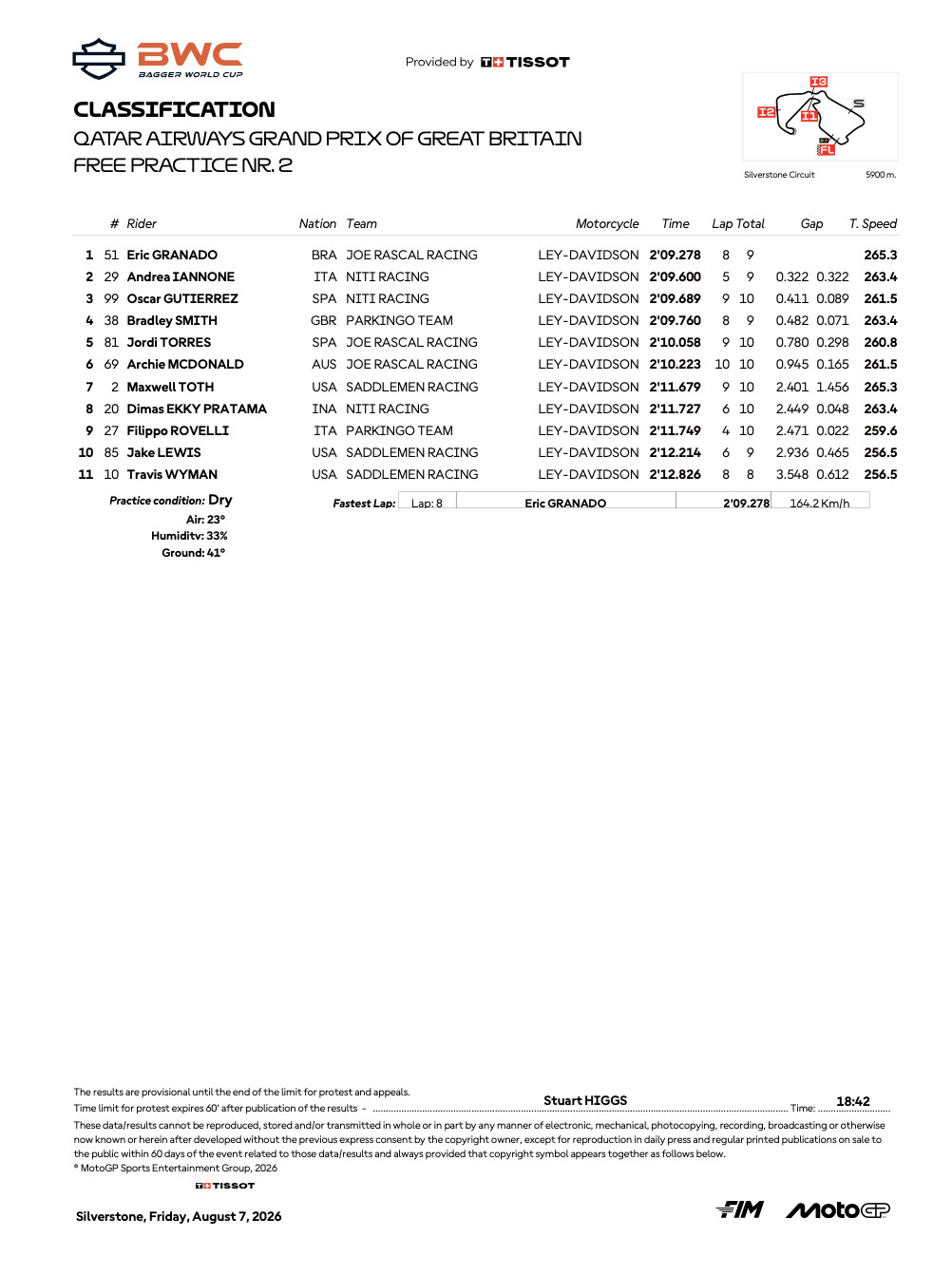
Free Practice 2 at Silverstone on Friday afternoon produced a tight, aggressive session across a field of 11 riders. Granado, the Brazilian aboard the No. 51 Joe Rascal Racing Harley-Davidson, laid down a 2:09.278 around the 3.67-mile (5.90 km) Silverstone road course on Dunlop control tires, topping the combined sheet.
Andrea Iannone slotted into second for Niti Racing Harley-Davidson with a 2:09.600 — just 0.322 seconds off the pace. His teammate Oscar Gutierrez rounded out the top three at 2:09.689, putting Niti Racing in a dominant position heading into qualifying. Home crowd favorite Bradley Smith of ParkinGO Team Harley-Davidson gave the British fans something to cheer about with a fourth-place lap of 2:09.760.
The American contingent running under the Saddlemen Racing Harley-Davidson banner had a tougher afternoon. Max Toth finished seventh with a 2:11.679, Jake Lewis was 10th at 2:12.214 and Travis Wyman rounded out the field in 11th with a 2:12.826. There's real time on the table for those three, and you can bet the tuning conversations happening in that pit garage Friday evening were intense.
The margin separating Granado from Iannone in second was less than a third of a second. On a 3.67-mile circuit, that gap lives in the transitions, the throttle application out of the fast sweepers and the stability of the chassis under hard braking. This is exactly why the equipment conversation at this level is never finished.
Why Silverstone Exposes Every Weakness in Your Setup
Silverstone is not a short circuit where you can mask handling problems with raw horsepower. The layout demands sustained high-speed commitment through corners like Copse, Maggotts and Becketts — a sequence that punishes any instability in the front end or vague response in the suspension mid-corner. Running a bagger-format motorcycle around this circuit at lap times pushing the 2:09 barrier means every component on the bike is working at or near its absolute limit.
Suspension is the first conversation. At Silverstone, teams are managing both compression and rebound damping across a circuit that shifts between high-speed load and quick direction changes. The performance bagger shocks used at this level bear almost no resemblance to stock touring dampers. Full adjustability — preload, compression, rebound — isn't a luxury at this level, it's the baseline requirement. If your road bike is still on factory suspension and you're chasing serious performance, that's the conversation you need to have with your setup.
Tire behavior on Dunlop control rubber compounds the challenge. Control tires mean every team is working with the same contact patch, so chassis geometry, suspension tune and rider technique separate the results sheet. That's a sobering data point for anyone who thinks bolt-on power alone is the answer.
The Engine Side: What Makes These Bikes Move
The Milwaukee Eight platform that underpins these Harley-Davidson touring racers is a legitimate performance foundation — but it doesn't stay stock for long in a series like this. The displacement, combustion efficiency and breathing capacity of these engines are all variables that teams attack aggressively before the bikes ever see a track.
Camshaft selection is one of the highest-leverage modifications you can make to a Milwaukee Eight. Lift, duration and lobe separation angle directly control how the engine breathes at different RPM ranges, and a proper cam swap transforms the powerband character of the motor. The Milwaukee Eight performance cam options available for street builds draw from the same engineering philosophy that informs what you see in competition — more aggressive ramp rates, higher lift, optimized separation angles for the RPM range you're actually using.
Exhaust flow is the other half of that breathing equation. Restricting exhaust flow on a performance-oriented Milwaukee Eight is like putting a thumb over a garden hose — the power that should be leaving the engine cleanly is fighting itself instead. A proper performance Harley exhaust system eliminates that bottleneck and lets the engine produce the torque and top-end pull it's capable of. In competition, exhaust tuning is matched precisely to cam profile and fueling — and on your street build, that same systems-thinking approach pays dividends on the dyno.
Fueling ties it all together. An upgraded exhaust and aggressive cam profile feeding into a stock fuel map is a recipe for a lean, unhappy motor. An auto-tune fuel management system closes that loop, reading actual air-fuel ratios and making real-time corrections to keep the engine in its optimal operating window regardless of conditions, altitude or temperature.
Granado's Consistency: FP1 and FP2 Back to Back
Granado's FP2 effort wasn't an isolated result. According to reporting, he was also quickest in FP1 earlier the same Friday — meaning the No. 51 Joe Rascal machine topped both practice sessions on the day. That level of back-to-back consistency doesn't happen by accident. It reflects a setup that's dialed, a rider who's comfortable pushing the platform and a team that made good decisions between sessions.
For Iannone and Gutierrez, the Niti Racing team will be looking hard at what margins remain before qualifying. They're within striking distance — hundredths of a second on a 2:09 lap — but Silverstone qualifying tends to compress even further than practice as teams commit to single flying laps with maximum attack.
The Saddlemen Racing Americans — Toth, Lewis and Wyman — are sitting in a gap that's measurable but not insurmountable. At a track like Silverstone, circuit familiarity is worth real tenths. As the weekend progresses and laps accumulate, that gap typically closes. Bradley Smith, running fourth as the home crowd's representative, knows this circuit the way only a rider who grew up racing in Britain can. His 2:09.760 on a bagger is a number that deserves respect.
Air Intake: The Modification Most Street Riders Underestimate
Watch any Bagger World Cup machine up close and one thing becomes clear immediately — nobody is running a stock air box. The engine needs to breathe in as efficiently as it exhausts out, and a high-flow performance air cleaner is the street-accessible equivalent of what race teams do to intake flow.
The stock Harley airbox is designed around emissions compliance and noise regulation, not peak airflow. A performance air cleaner removes those restrictions and lets the engine pull the volume of air it wants at the RPM you're asking for it. Paired with a cam upgrade and tuned exhaust, the result is a motor that feels fundamentally different — more responsive, more linear in its torque delivery and more willing to rev.
For riders running forced induction — turbo or supercharger setups — this becomes even more critical. You're moving vastly more air volume through the system and every restriction is amplified by the boost multiplier. Whether you're naturally aspirated or boosted, flow in and flow out is the engine performance equation in its simplest form.
What Bagger Racing Means for Your Street Build
The Bagger World Cup at Silverstone is more than a racing series. It's a live, competitive development environment for the exact platform many of you are riding to work, to rallies and on weekend canyon runs. Every setup decision those teams made before shipping their bikes to England — suspension, cams, exhaust routing, fueling, brakes — maps directly to the modifications available for your Road Glide or Street Glide.
The gap between what Granado is doing at 2:09 around Silverstone and what your bagger is capable of is a function of competition-grade components, development time and rider commitment. The component part of that equation? That's addressable right now.
Brake performance is one area worth calling out specifically. Silverstone's long straight into the heavy braking zones puts a serious thermal load on rotors and pads. A performance bagger brake kit with higher-friction compound pads and improved rotor mass manages that heat more effectively than stock hardware — and on the street, that translates to more consistent, more confident stopping power in the situations where it actually matters.
If you're looking at the Saddlemen Racing Americans sitting in seventh through 11th and thinking about what separates them from the front row, part of that answer is in the details — brake bias, suspension preload settings, exhaust tuning, fueling maps. These are not exotic inaccessible variables. They're the same categories of modification that VTwin Bikers stocks for your build.
Take Your Build to the Next Level
Granado went quickest at Silverstone on a Harley-Davidson bagger. That fact should reset your expectations of what this platform is capable of — and push you to ask harder questions about the gap between your bike's current setup and what it should be. The Bagger World Cup is running at one of the most demanding road courses in the world and the hardware underneath those racers is an evolution of what you can build in your own garage.
If Friday's sessions lit a fire under your build plans, start with the fundamentals: cam profile, exhaust flow and fueling. Then address suspension and brakes. Each category of upgrade compounds the others. Browse our Milwaukee Eight cam upgrades and performance exhaust systems to find the combination that fits your build goals — and shop our full performance bagger collection at vtwinbikers.com to put your Road Glide or Street Glide on a path toward the kind of capability those Silverstone riders are chasing every weekend.